
One Buoy at a Time
Reflections on My First Ironman 70.3
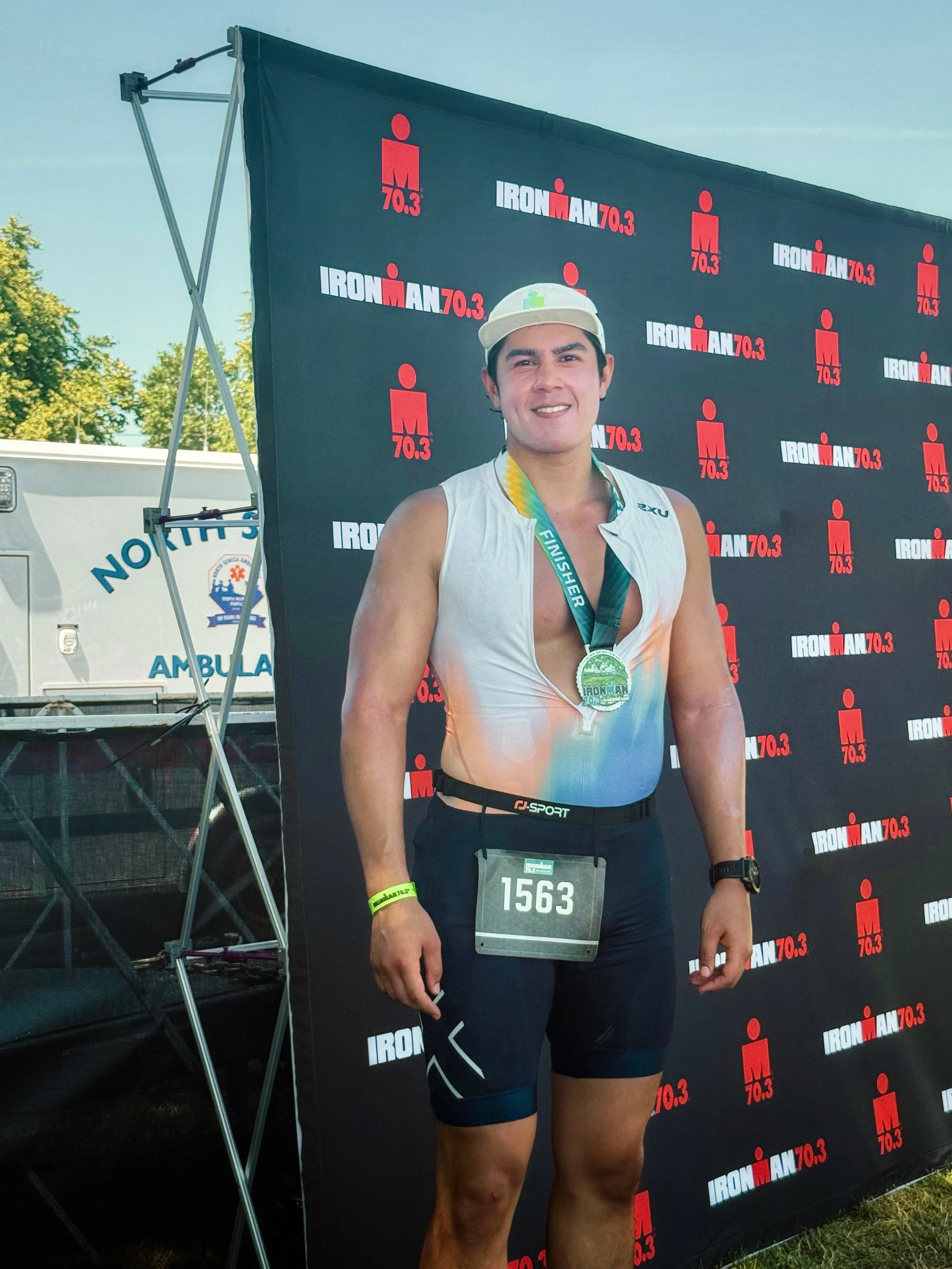
Proud to call myself an Ironman 70.3 finisher
Looking back, it fascinates me how some of the most meaningful moments in our lives begin without any hint of the impact they will have one day. It's almost impossible to believe that this entire journey began with two friends sitting together in a small café, sharing nothing more than a simple conversation. We were talking about life, sports, and the thrill of pushing ourselves when my friend suggested we sign up for an Ironman 70.3. At first, it sounded ridiculous. Neither of us had ever done a triathlon, and even though we both played sports, an Ironman felt like a different world. But the more we talked, the less impossible it seemed. A few days later, we went back to that café, opened our laptops, and looked at races around the country. We chose Ironman 70.3 Musselman in Geneva, New York. It was close enough to get to, surrounded by vineyards and the Finger Lakes, and the bike course was known for its beauty. Something about that place pulled us in. Without thinking too much, I signed up that day. It was just one click, but looking back, I see that it changed the next seven months of my life. At the time, I thought I was signing up for a race. Now I know I was starting a journey that would teach me more about myself than I expected.
Training for an Ironman gave me a new understanding of what it means to be an athlete. Most of my life, I played sports built on quick bursts of power. Football, boxing, wrestling, jiu-jitsu, CrossFit, and weightlifting all shaped how I thought about strength. Success meant being fast, powerful, and intense. But endurance sports play by a different set of rules. They taught me that real progress rarely comes from moments of intensity. It happens when you keep showing up, trust the process, and keep working even after the excitement is gone. Swimming was my biggest challenge. I learned to swim as a kid, but I never felt like a strong swimmer, and every practice showed me how technical swimming is. Some days I left the pool feeling good, but other days I wondered if I was making any progress. Cycling was even newer for me. I remember clipping into cycling shoes for the first time and laughing at how awkward I felt, barely able to stay upright. Watching experienced cyclists glide by while I struggled to start and stop without falling reminded me that everyone starts as a beginner. Now, I see those uncomfortable moments as some of the most valuable. There's something refreshing about putting yourself in a situation where you don't know much. It shows you that growth always starts with humility.
What surprised me most was how much I started to enjoy the training itself. The race became less important than the process of getting ready for it. My daily habits changed almost without me noticing. I paid more attention to my sleep, food, recovery, and how I took care of myself. I learned about fueling, hydration, electrolytes, pacing, and recovery, but the biggest lesson was the satisfaction of getting a little better each day. There were no big breakthroughs or overnight changes, just small wins that added up over months. Looking back, I think that's one of the best lessons from endurance sports. We often admire big achievements, but we forget they come from many ordinary days when someone just kept showing up. Progress rarely feels remarkable while it's happening. Only when we look back do we see how far we've come.
Race weekend finally came, and it brought a feeling that's hard to put into words. The timing made it even more special because the day before the race was my twenty-fifth birthday. I can't think of a better way to start a new year of life. My parents came to Geneva to support me, and my good friend Noe, who first suggested this adventure, was there too. Having them there made the weekend feel even more meaningful. Over time, I've realized that the best moments in life aren't about the event itself, but about the people we share them with. Achievements mean more when they're shared, celebrations feel warmer, and even difficult times are easier when loved ones are with us. Geneva was more beautiful than I expected. The vineyards rolled over the hills, Seneca Lake stretched out to the horizon, and the countryside had a beauty that reminded me of Tuscany. Everywhere I looked, I felt calm. Nature always helps me slow down and clear my mind. That weekend, I started to really notice the world around me. Beautiful places encourage us to be present and help us see things we might usually miss.
The day before the race went by fast. We had breakfast at a café called Grounded, where I ate more carbs than usual, knowing I needed the energy. The afternoon was filled with athlete check-in, race briefings, packing transition bags, and small tasks that made the race feel more real. That night, we celebrated my birthday over dinner, enjoying memorable food and conversation before heading back to the hotel for an early night. To my surprise, I slept well. Maybe months of training gave me the confidence, or maybe I was just tired. Either way, when my alarm went off at four in the morning, I woke up smiling. It felt like just yesterday that Noe and I first talked about doing an Ironman. Seven months had flown by. Time is strange like that. While we're living it, progress feels slow, but when we look back, whole chapters of life seem to pass in a flash.
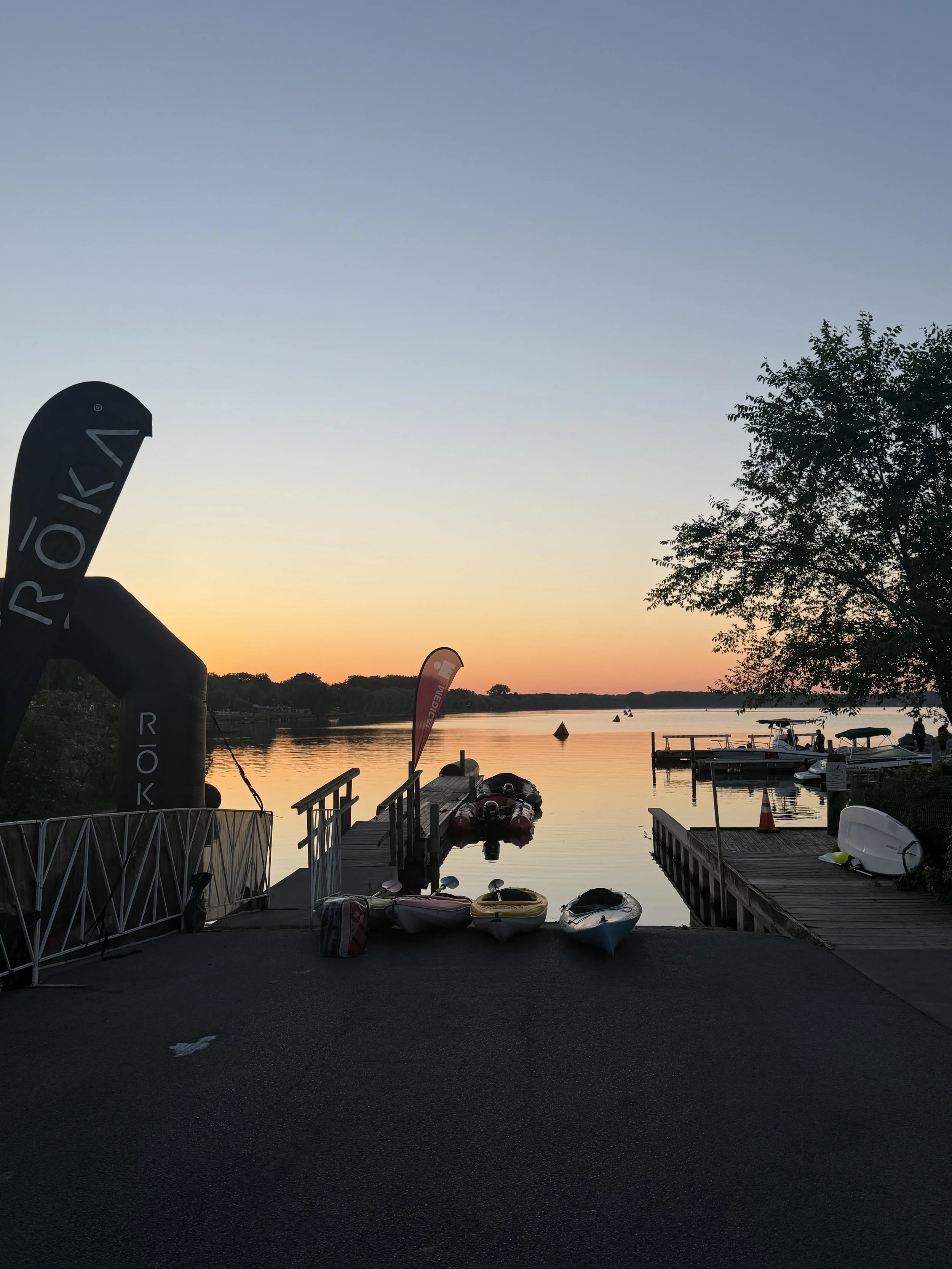
The calm before one of the most challenging and rewarding days of my life
Walking to the race start in the early morning darkness is a memory I'll always keep. The air was cool, the lake was still, and hundreds of athletes headed toward transition carrying bags packed with months of preparation. There wasn't much talking. Some people stretched in silence, others prayed, and many just stared at the water, lost in their own thoughts. I realized that even though we all came from different places and backgrounds, we were about to face the same challenge together. Just before the swim started, Noe found me. We smiled, bumped fists, and both knew what this moment meant. This was it. All our training had led us here. As I pulled on my wetsuit and walked to the shore, I suddenly heard my dad cheering my name from behind the crowd. I turned, smiled, and felt a wave of gratitude.
Standing at the edge of Seneca Lake at sunrise, surrounded by thousands of people choosing to do something extraordinary, I thought about how inspiring people can be. It's remarkable to see people push themselves, not because they must, but because they want to find out what they're capable of. I stepped into the water, carrying that feeling with me, and thought the hardest part of the day was still ahead. I had no idea that in the next fifty yards, the race would teach me my first and maybe greatest lesson.
The first few moments were just as I had pictured. The water was cold but refreshing, and the excitement of finally starting pushed me forward. Months of waiting turned into action. But then, almost suddenly, everything changed. Within the first fifty yards, I found it hard to breathe. At first, I thought it was just nerves. I slowed down, took a deeper breath, and tried again, but it only got worse. The wetsuit that felt snug on land now seemed to squeeze my chest. Every breath was shallow. Every stroke took more effort than it should have. My mind raced for answers. Was I this unprepared? Was something wrong with my lungs or my heart? Was I having a medical emergency? In the middle of the lake, surrounded by hundreds of swimmers, my own thoughts drowned out everything else.
I stopped swimming and started treading water. I remember watching wave after wave of athletes move toward the first buoy while I stayed almost still. Time seemed to slow down. It’s strange how quickly the mind jumps to the worst outcome. Less than a minute into my first Ironman, I was already imagining it ending. I pictured myself climbing onto a kayak, being pulled from the water, and watching the rest of the race go on without me. It’s almost embarrassing to admit, but those thoughts did cross my mind. Fear can make our world feel small until all we see is the problem right in front of us.
Somehow, I made it to the first kayak, where a volunteer greeted me with calm and kindness. I told her I could barely breathe and that my wetsuit felt way too tight. She listened patiently and encouraged me to slow my breathing and just focus on reaching the next buoy. Her voice was steady and reassuring. She reminded me I could rest whenever I needed. Those few words changed everything. Until then, I thought I had to swim the whole distance or quit. She showed me another way: I didn’t have to finish the swim all at once. I just needed to make it to the next buoy. That became my race. Not 1.2 miles. One buoy. Then another. Then another.
Each time I reached a buoy, I gave myself a moment to recover before moving on. Sometimes I held onto a kayak, other times a buoy, taking slow breaths as other swimmers passed by. What surprised me most was realizing I wasn’t alone. Around every buoy, athletes were fighting their own battles. Some were exhausted. Others were scared. A few just needed a moment to gather themselves before going on. That realization comforted me. I had thought everyone else was moving forward easily while I struggled. In truth, everyone carried something unseen. We were all just carrying different things.
Looking back, I see that my biggest obstacle during the swim wasn’t the wetsuit. It was my own mind. The physical discomfort was real, but the stories I told myself made it much worse. I convinced myself I had failed before I even gave myself a chance to adjust. I imagined letting down my family, my friends, and myself long before anything had happened. It's surprising how often we make ourselves suffer over things that aren't really happening. Somewhere between one buoy and the next, I started letting go of those imagined outcomes. I stopped worrying about finishing the swim and focused on taking one more stroke, reaching one more buoy, and repeating that process.
What touched me most during those long minutes in the lake wasn’t my own perseverance, but the kindness of strangers. Every volunteer I met offered encouragement with real warmth. The kayakers never made me feel like a bother. Other athletes resting nearby shared smiles, short conversations, and encouragement before moving on. Even in one of the most difficult endurance events, people still found ways to care for each other. That realization has stayed with me much longer than the struggle itself. We often think competition brings out the best athletes, but I left believing it also brings out the best in people.
Finally, after what felt like forever, I noticed the lake getting shallower. My feet touched the sand for the first time, and I can’t fully describe the relief I felt. I stood up, laughed to myself, and ran the last stretch out of the water. My first thought was, Well... that was hell. I still laugh when I remember saying it. But almost right away, I found myself smiling. It wasn’t really hell. It was what I can only call beautiful hell. The lake was stunning. The sunrise was remarkable. The volunteers were incredible. The people around me showed what kindness looks like under pressure. Somehow, one of the hardest experiences of my life also became one of the most beautiful. Maybe that’s how many worthwhile things in life are. They ask more of us than we think we can give, and in return, they reveal parts of ourselves we might never have found otherwise.
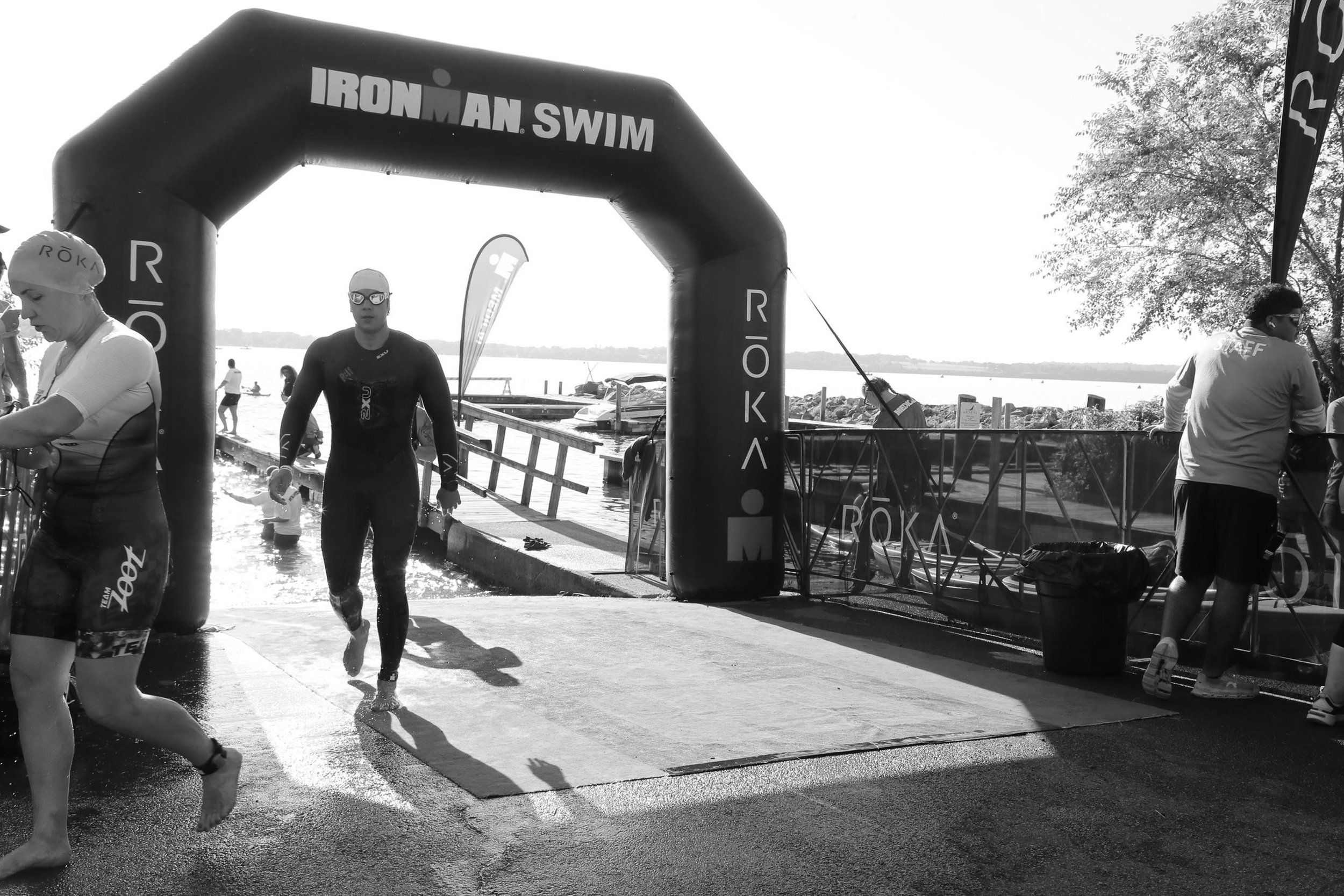
With each stroke forward, I chose not to give up.
Climbing onto the bike after what felt like ages in the water was almost unreal. In the transition area, I took a deep breath and tried to pull myself together while chaos unfolded all around me. Athletes hurried everywhere, volunteers called out instructions, helmets snapped on, shoes changed, race belts fastened, and it seemed like everyone but me knew exactly what to do. I chuckled as I fumbled with my gear, hoping I wouldn’t forget anything important before heading out. Those few minutes were a wonderful mess. Nothing went perfectly, but that didn’t matter anymore. The most difficult part, at least in my mind, was over. I had finished the swim. Just knowing that gave me a new sense of confidence as I crossed the mount line and started the fifty-six-mile ride through the Finger Lakes.
Right away, everything felt different. The panic I’d felt in the water faded, replaced by a sense of gratitude. As the roads opened, I caught myself smiling. It wasn’t because my legs felt fresh—they didn’t—but because I could finally take in my surroundings. The bike course was just as beautiful as everyone had said. Long stretches of road took us through rolling vineyards, open farmland, and peaceful countryside that seemed to go on forever. More than once, I thought about Tuscany. There was something familiar about it all. The vineyards, winding roads, gentle hills, and warm summer light reminded me of places I’d loved while traveling in Italy. If I hadn’t known better, I might have thought I was riding through the European countryside instead of upstate New York.
As I kept riding, I noticed how beauty can take your mind off discomfort. My legs were working hard, my heart was pounding, and I still had a long way to go, but I kept focusing on the scenery. I watched sunlight move across the vineyards, saw old farmhouses tucked into the hills, and listened to the wind in my ears. Sometimes, you find yourself completely present without even trying, and this was one of those times. For a few hours, nothing mattered except the road ahead. Deadlines, responsibilities, and daily worries faded away. All that was left was the next hill, the next turn, the next breath, and the remarkable feeling of moving through such a beautiful place on my own.
The people along the course moved me as much as the scenery did. Families stood outside ringing cowbells, kids held up handmade signs to cheer for strangers, and volunteers encouraged every athlete, whether they were in front or at the back. I realized how special these events are. Thousands of people give up their weekends just to help others reach a personal goal. They might never know our names or stories, or how much work we put in, but they cheer for us like old friends. That kindness stayed with me the whole ride. It reminded me that people are often at their best when they come together for something bigger than themselves. We hear so much about division and conflict that it’s easy to forget how naturally people support each other when they get the chance.
Around halfway through, I stopped thinking about finishing and just enjoyed being there. I had dreamed of completing a 70.3 for months, but in that moment, I didn’t want to rush to the end. I wanted to remember the vineyards, the breeze, the laughter from the crowd, and the feeling of riding through such a beautiful place. We often get so focused on finishing that we forget to enjoy being in the middle of it. Looking back, I think those miles taught me as much as any book. Joy doesn’t usually wait for us at the finish line. Most of the time, it’s found in the journey itself, if we slow down enough to notice.
Of course, your body eventually reminds you that beauty doesn’t erase fatigue. As the miles added up, my legs felt heavier with every climb. The excitement from earlier slowly turned into hard work. Each hill seemed a bit steeper, and the last stretch took more focus than I expected. By then, I wasn’t admiring every vineyard or field anymore. My focus was back on the road ahead. One pedal stroke at a time. I could feel the run waiting for me, and I knew the day wasn’t close to over. Still, even as I got more tired, I found myself smiling. If you’d told me months ago that I’d ride fifty-six miles through vineyards after swimming over a mile in open water, I would have laughed. But there I was, doing just that. I was exhausted, but deeply grateful. As I rolled back to transition, I thanked the course, the volunteers, and the beautiful countryside that got me through those miles. My legs were tired, but my spirit felt lighter than it had all morning. I had finished the swim. I had crossed the vineyards. One last challenge was left: the half marathon.
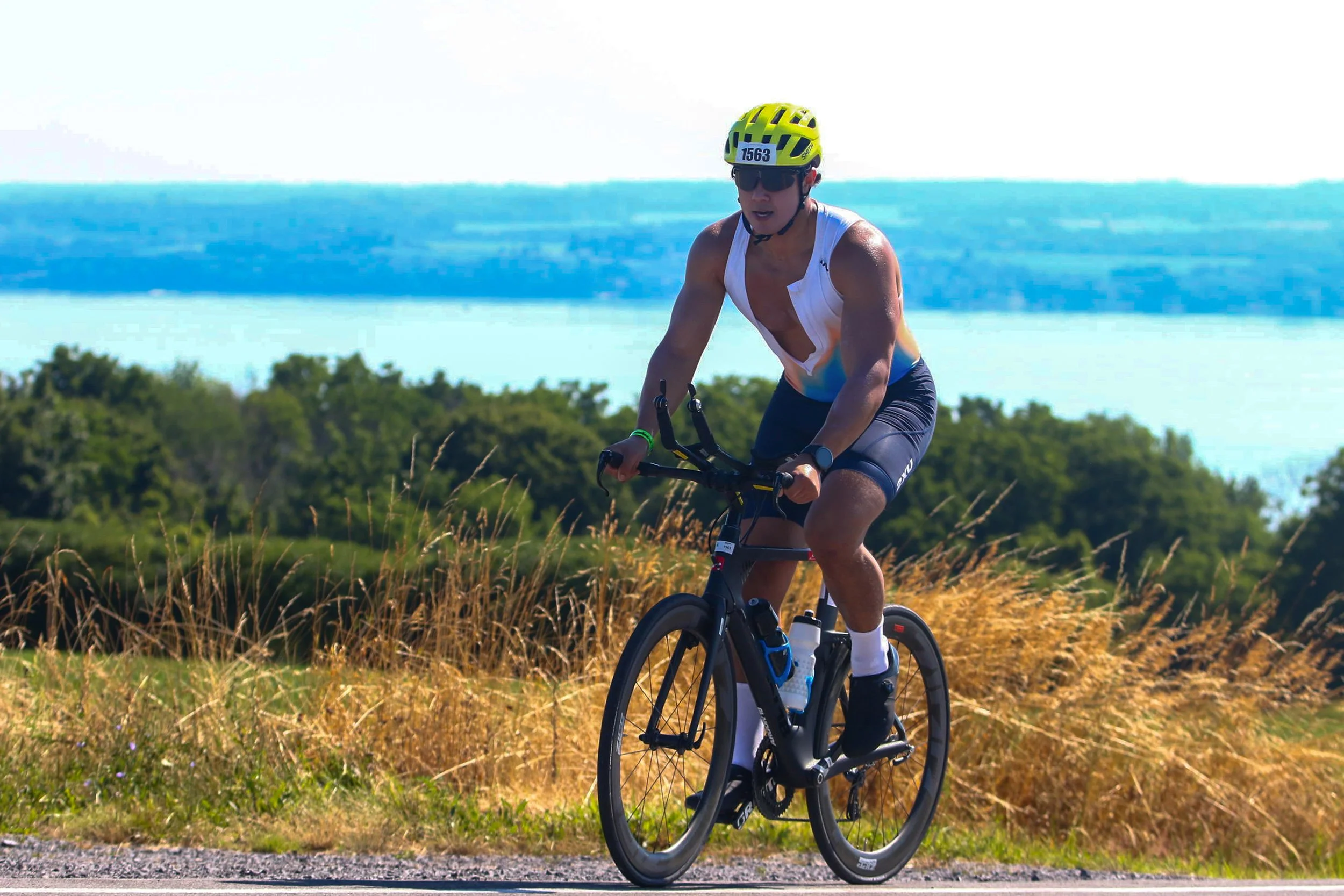
The roads through the Finger Lakes reminded me that beauty often arrives alongside effort.
Leaving transition for the last time was emotional. The bike portion was done, but the day wasn’t over. Ahead of me was a half-marathon, thirteen point one miles to the finish. I’d heard many triathletes say the run is where the race really begins, and within the first mile, I understood why. My legs felt like they weren’t mine. They were heavy, stiff, and disconnected after hours of swimming and biking. Each step reminded me of what my body had already gone through, and I quickly saw that running after an Ironman bike ride is nothing like running on fresh legs. This wasn’t just another run. It felt like a whole new sport.
The first few miles went steadily, but soon a sharp cramp hit my leg. Then another followed. I slowed down, hoping the pain would pass, but it only got worse. Eventually, I stopped at the side of the course, unsure what to do next. The same doubts I’d felt in the lake came back. Maybe this was where my race would end. Maybe my body just couldn’t keep going. It’s surprising how quickly fear returns in unfamiliar situations. Standing there, I pictured having to tell my family and friends that I couldn’t finish. The race had become a mental struggle long before it became a physical one.
While I tried to stretch out the cramp, runners kept passing by in both directions. Some encouraged me to keep moving, saying that stopping would only make my muscles tighten more. Their advice helped, but I still wasn’t sure. The pain was unlike anything I’d felt before, and I wondered if pushing on would make it worse. Then something happened that I’ll never forget. A woman ahead of me noticed I was struggling. She slowed down, turned around, and came back to ask if I was okay. I told her my legs were cramping badly, and I wasn’t sure how much farther I could go. Without hesitation, she reached into her pocket, handed me salt tablets, smiled, and said, "Take these. They should help." I thanked her, took the salt, and started moving again.
To my surprise, the cramping eased within minutes. It was hard to believe. I laughed to myself, amazed that something so small could make such a big difference. But more than the salt, I kept thinking about her kindness. She was running the same race, chasing her own goal, but still chose to help a stranger. She didn’t owe me anything, but she helped without a second thought. I never learned her name, and maybe that’s what makes the memory even more special. Sometimes, the people who shape our lives are only with us briefly before moving on.
The cramps came back a few more times during the run, but they didn’t scare me anymore. Each aid station was a chance to refill my bottles, take electrolytes, grab more salt, and share encouraging words with volunteers. Somehow, the volunteers treated every athlete like they were the first person they’d cheered for all day. Their energy never faded. Mile after mile, they told us we were doing well, that we were almost there, and that we were stronger than we thought. After six or seven hours of effort, those simple words meant everything. Encouragement doesn’t always take away the pain, but it can give us strength to keep going.
During the run, I often found myself lost in thought. Even though thousands of people were around me, there were times when I felt completely alone with my own mind. An Ironman race has a way of doing that. You’re always surrounded by others, but much of the journey is spent talking to yourself. I thought about my family, my friends, and how lucky I was to have my parents cheering somewhere along the course. Sometimes I’d see familiar faces, hear my name, or spot Noe far ahead after so many miles. Those moments lifted my spirits before I drifted back into my thoughts. In many ways, the race became less about beating others and more about understanding myself. There was no one left to impress, just the next step to take.
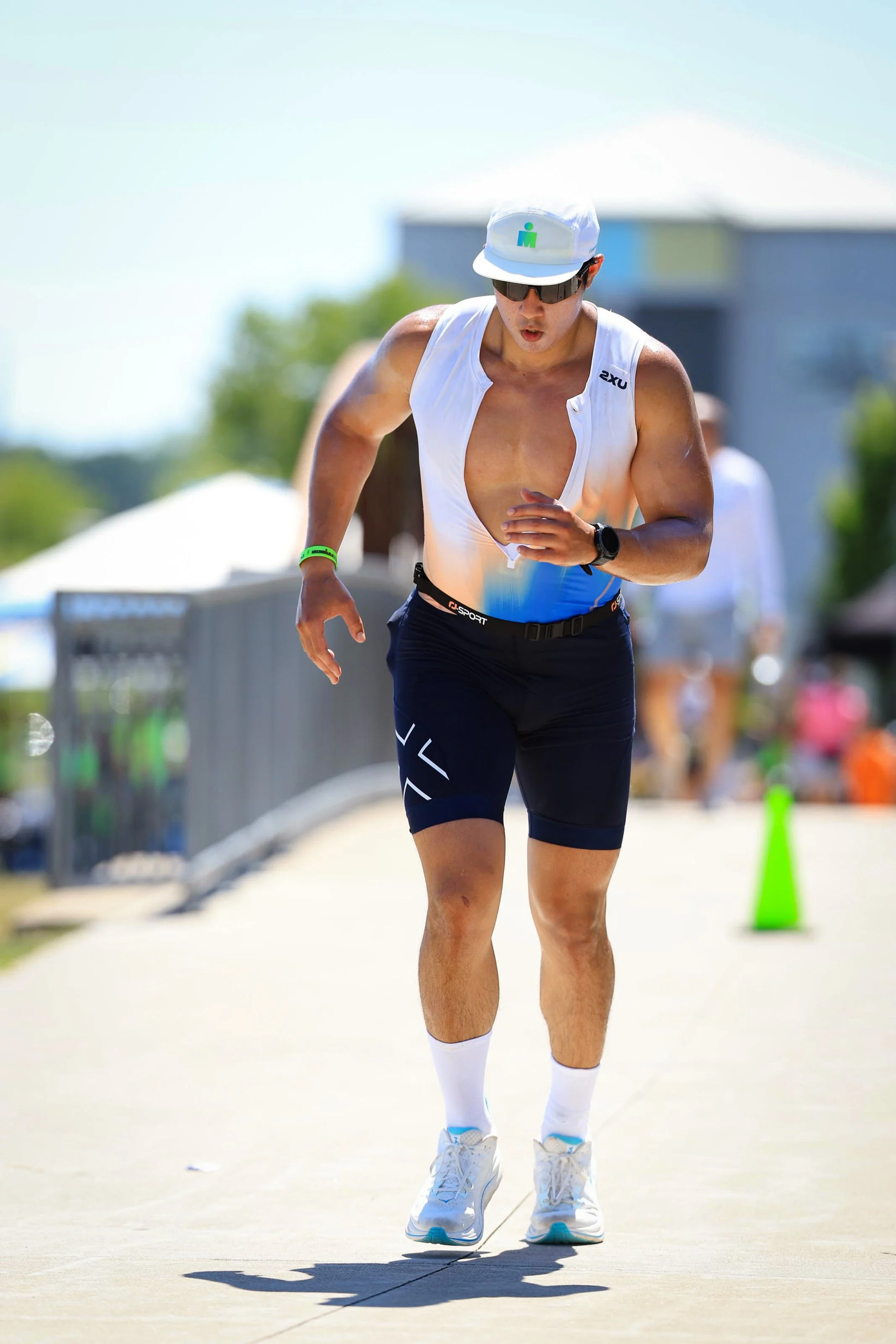
By this point, every mile had become a conversation between my body and my mind.
As the miles slipped by, I realized the day was almost over. There’s something bittersweet about reaching the end of something you’ve looked forward to for months. This race had filled my thoughts, shaped my routines, and given structure to my days. Now, almost suddenly, it was ending. In the last mile, I felt my emotions rise, not just from exhaustion, but because I knew I’d never have another first Ironman. No matter how many races I do, there’s only one first time. I wanted to slow everything down and remember every step, every face, and every feeling before it became just a memory.
With less than a mile to go, I set myself one last goal. I checked my watch and decided to finish before the time I had in mind. Whatever strength I had left, I would use it all. I picked up my pace, encouraged the runners around me as they encouraged me, and together we pushed each other toward the finish.
Then, almost out of nowhere, the finish line came into view. For months, I had only pictured it in my mind. Now it was right there in front of me. I crossed under the arch carrying much more than just a medal. Relief hit me first, then gratitude. I was grateful I’d signed up, grateful I hadn’t quit in the lake, grateful for strangers who helped me when I needed it most, and grateful my family and friends had shared this journey with me. As I walked through the finish area, exhausted, I looked for the faces I loved most. Seeing them waiting for me is still one of my favorite memories from the weekend. My only regret was finishing too late to see Noe cross the line. After everything we’d shared over the past seven months, I wanted to cheer him home as so many had cheered for me. But maybe that’s what friendship is. Sometimes we run side by side, and other times we just know the other person is out there, fighting their own battle with the same determination.
As I stood there with my medal around my neck, I realized something that had been revealing itself to me all day. This race was never about swimming. Or about cycling. Or about running. It was always about people.
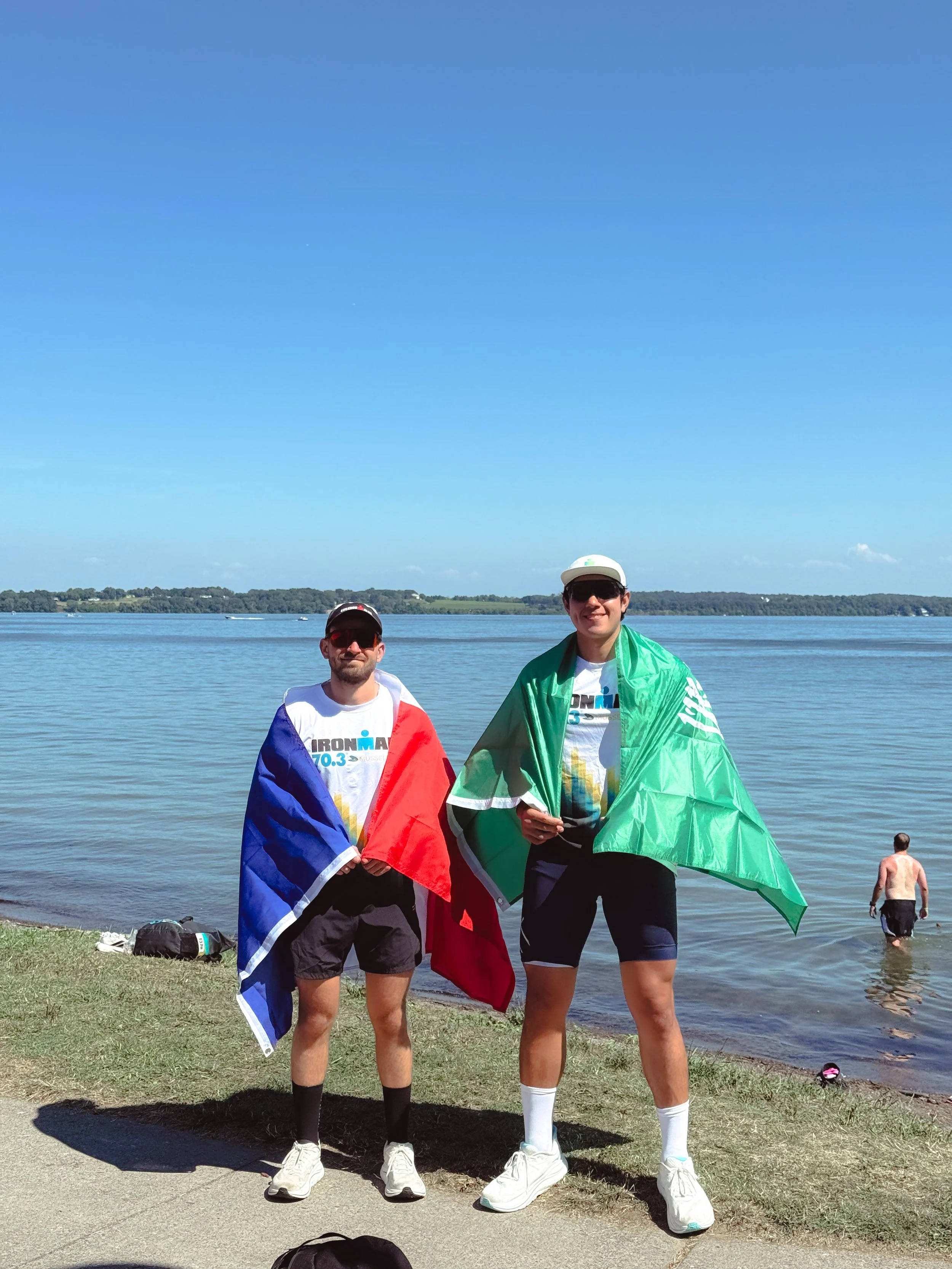
The journey began with two friends in a café. It ended here.
When I look back, I see that the race wasn’t about testing my physical limits. It taught me what the human spirit can handle when you refuse to give up. Before the race, I thought endurance was all about strength, speed, finish times, and pushing through pain. Somewhere between the panic in the lake, the miles through the vineyards, and the cramps on the run, my idea of endurance changed. I learned that endurance can be softer than we think. Sometimes it just means moving toward the next buoy when the finish line feels too far away. Sometimes it’s letting someone help you, even when your pride says not to. Sometimes it’s just believing that taking one more step is enough.
What I remember most isn’t my finishing time. It’s not the medal on my wall or the numbers on my watch. It’s the people. I remember hearing my dad’s voice above the crowd before I started. I remember the kayakers calmly telling me to just reach the next buoy. I remember volunteers cheering for strangers for hours. I remember a woman who stopped her own race to give me salt and help me keep going. I remember kids ringing cowbells, families cheering for athletes they didn’t know, and runners supporting each other even when they were hurting too. In a world that can feel divided, this race showed me how people naturally choose kindness when they can. That was the biggest victory I saw that day.
There’s a quote from Ralph Waldo Emerson that I’ve remembered for years: "It's not the destination, it's the journey." I’ve heard it many times, but I don’t think I understood it until now. The race lasted just over seven hours, but the journey took seven months, and maybe even longer. Every early swim, every long ride, every difficult run, every doubt, every small win, every talk with friends, every sunrise, and every lesson along the way became part of something bigger than just crossing a finish line. I finished as an Ironman 70.3 finisher, but I left with something more valuable than a medal. I left with a deeper appreciation for perseverance, gratitude, beauty, and, most of all, people
If there’s one lesson I want to remember long after the soreness fades, it’s this: life isn’t about big leaps. Most of the time, it’s about taking things one buoy at a time, one hill at a time, one mile at a time, one difficult conversation at a time, and one ordinary day after another. We spend so much time looking for big, special moments that we sometimes miss the small choices that shape us. Looking back, I don’t think the Ironman changed my life in one day. It just showed me what seven months of small, steady choices had already created.
Ironman’s motto is "Anything is Possible." After going through this, I see those words in a new way. They don’t mean everything will be easy or that every goal will go as planned. They mean that even when we feel afraid, unsure, or doubtful, which happens a lot, we can keep going anyway. Sometimes courage isn’t about finishing first or fast. Sometimes it’s just about not giving up.
And maybe that’s enough.