
November 4, 2026 - Cambridge, Massachusetts
I've realized just how much we can learn from a simple chat. I find the most illuminating conversations are the ones in which you have absolutely no expectations as to what you're going to find out. You go in with your own experience and your own way of looking at the world and come out with something you'd never have thought of before. That's particularly true of education, I think: it is a lifelong pursuit because there is always more to learn and always something to challenge your perspective. We're all in the process of becoming, and I think some of our most significant discoveries stem from simply being willing to stay curious.
It was 9.00 on a Wednesday morning and I had a meeting with Professor David Dockterman scheduled. I'd been looking forward to having a chat with him about my work and some of the things I'd been working on in his Impact by Design course. One of the things I've enjoyed most about my time at Harvard has been the chance to learn from people whose experiences and points of view are so very different from my own. I find myself increasingly interested in the way those conversations can bring together ideas from quite disparate fields.
One of the first questions Professor Dockterman asked me was about my paintings. I'd mentioned my painting practice in a number of the weekly reflections for the course, frequently linking what I was doing in the studio with what I was learning about education. We talked about my work, the decisions I make as a painter, and eventually we got to something that has been absolutely central to my artistic practice for a long time, albeit something I've never really been able to articulate: intuition.
I've used that word 'intuitive' time and again when describing my process. I'll often say that my decisions are intuitive, that I go with my gut, that it's my feelings and my observations that guide the work. The more we discussed intuition, the more I realized how little I actually understood it. What on earth is intuition? Is it just a gut feeling? Is it a kind of experience? A form of knowledge that we have prior to being able to articulate it at all? Or why do we so often feel so certain about something and yet have absolutely no idea why?
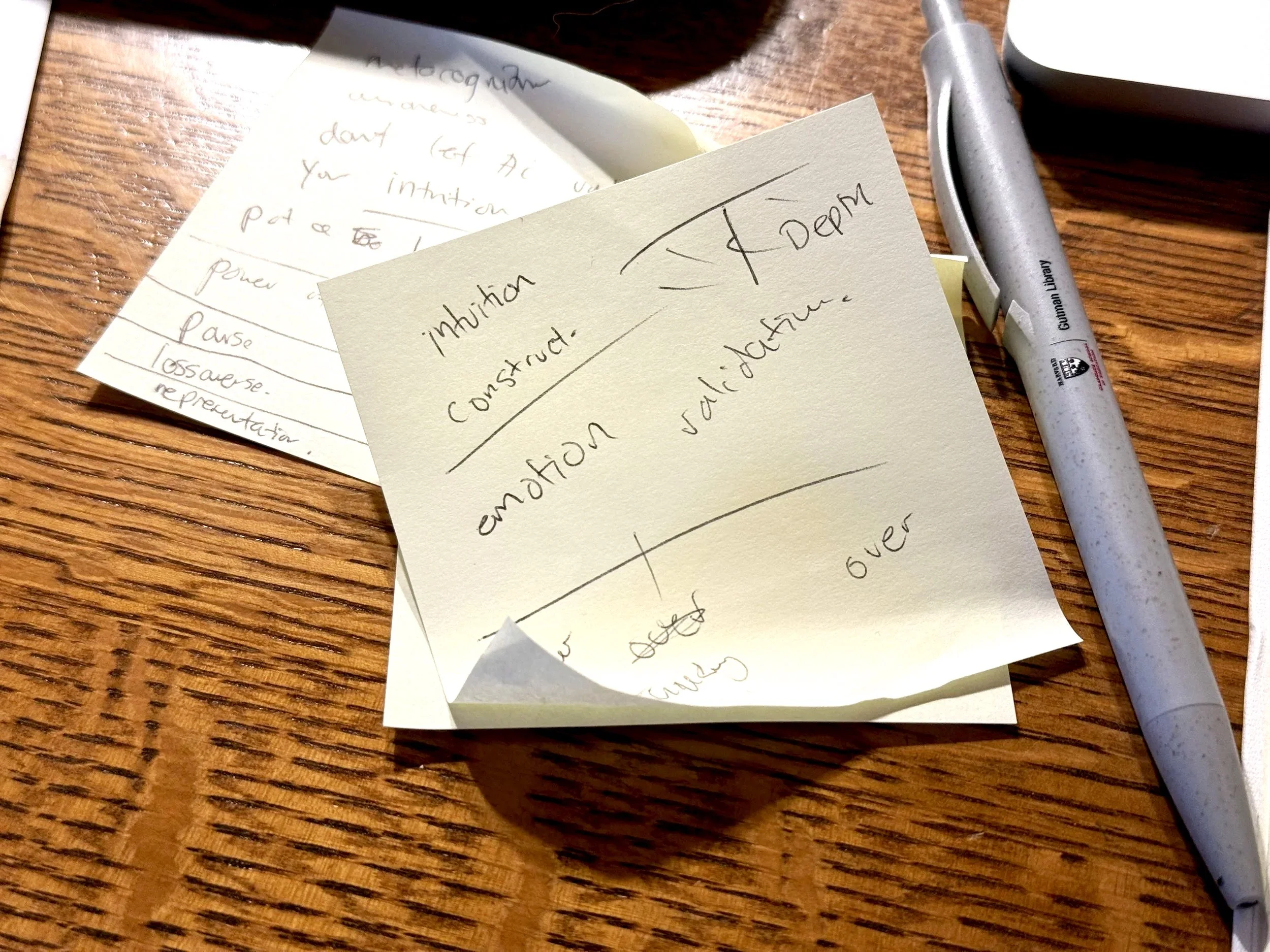
Notes from a conversation with Professor David Dockterman. November 4, 2026.
I find this especially interesting because so much of my life as a painter involves making decisions that are difficult to articulate. Painting is, by its very nature, a solitary practice. I spend countless hours alone in the studio, surrounded by unfinished works, brushes, colors, and my own wandering thoughts. Sometimes these hours are wonderfully fulfilling and other times, they can be frustrating and even isolating. Some days, everything comes together effortlessly. One decision leads naturally to another, and I find myself completely absorbed in the process. Other days, I stand before a painting for what feels like an eternity, unsure what to do next. It might be the composition doesn’t feel right, or the colors aren’t communicating what I had imagined. I might spend an hour looking at a particular section before finally making a small adjustment. Often, I cannot explain why that adjustment was necessary. I felt that something needed to change.
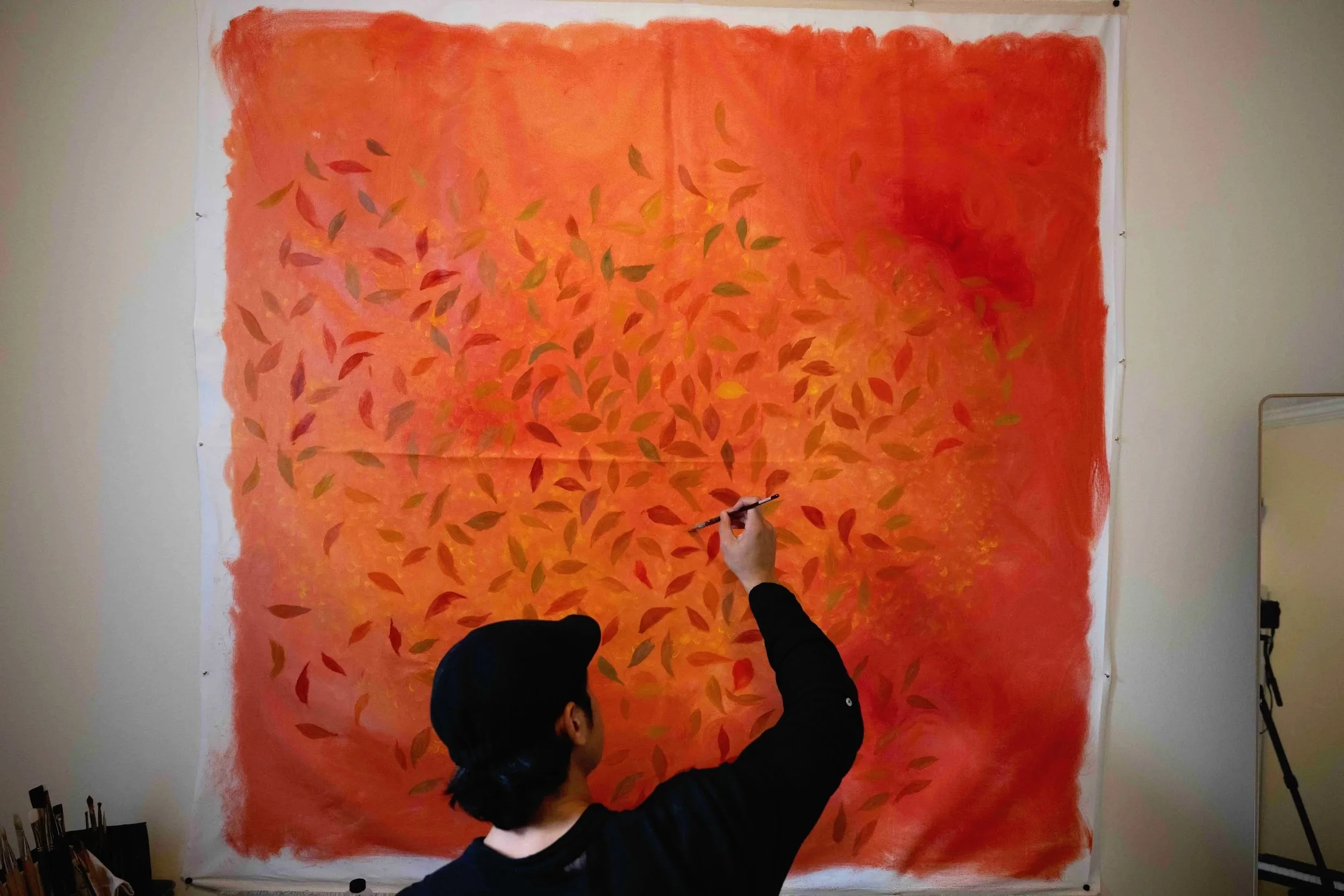
In the studio, where observation and intuition guide the process.
I wonder how much of this comes from experience. Perhaps intuition is not quite as mysterious as it first appears. Over the years, I have spent so much time observing the natural world, studying the works of painters I admire, experimenting with materials, and making countless mistakes over and over again. Each experience must leave something behind, some impression or understanding that becomes part of how I see. When I encounter a particular quality of light or an arrangement of colors, perhaps I am drawing upon something I have encountered before, even if I cannot consciously remember it. There is something beautiful about that possibility. Our experiences, however ordinary they may seem at the time, continue to shape how we understand and respond to the world.
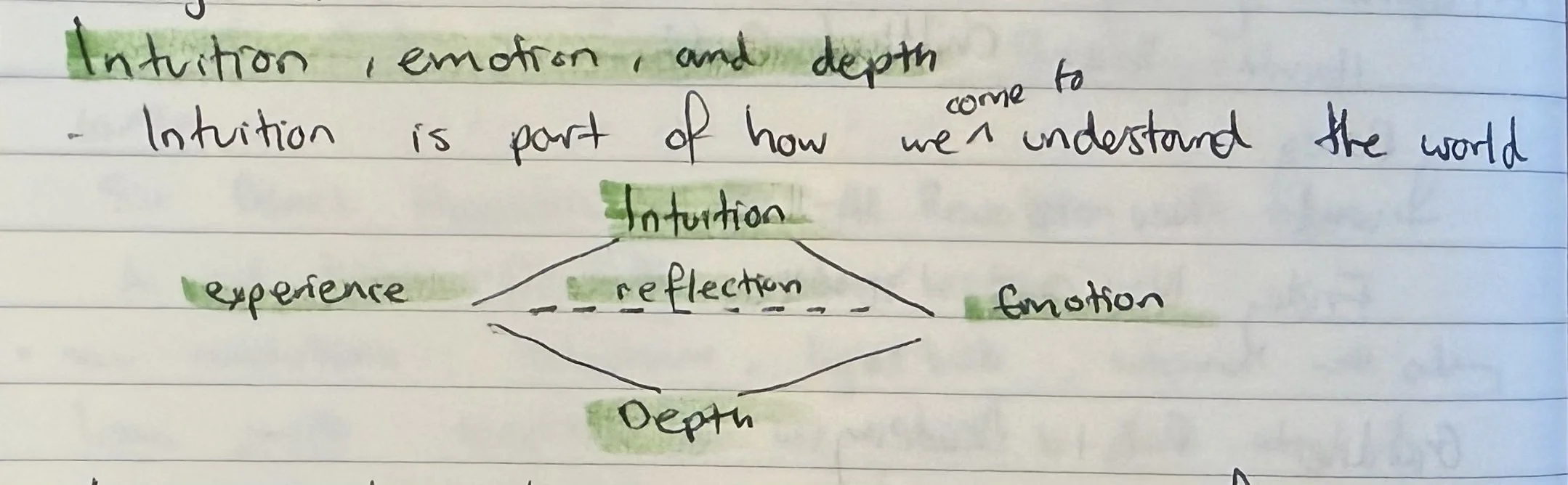
I think about this whenever I am walking outdoors with my camera or sketchbook. I can spend an unreasonable amount of time looking at a tree, the changing colors of the leaves, or the way sunlight finds its way through a group of branches. Something about these moments draws me in. I don’t necessarily know what I am looking for, and perhaps that is precisely why I enjoy them so much. I am not trying to arrive at an answer. I am simply allowing myself to notice what catches my attention. Sometimes these observations eventually become paintings. Other times they remain memories, small encounters with the world that I carry with me. The more I observe, the more there is to observe. It is a rather wonderful thing.
Our conversation eventually turned toward teaching, and Professor Dockterman asked me what I found most valuable about teaching art. I spoke about something that has brought me tremendous satisfaction whenever I have had the opportunity to work with students, particularly those who do not consider themselves creative or artistic. There is something incredibly rewarding about helping someone discover a capacity within themselves that they previously believed did not exist. I love seeing that moment when a student’s eyes light up, when they become genuinely excited about something they have made. It is often a small moment, perhaps a drawing they are particularly proud of or a color they have discovered through experimentation. But to me, these moments can mean so much more than the finished work itself.
Some of my most meaningful experiences teaching art have also come from moments of difficulty. I remember students becoming discouraged because something didn’t turn out the way they had imagined. A mistake suddenly becomes evidence, in their minds, that they are not good at art. I recognize that feeling because I have experienced it myself countless times. Yet one of the wonderful things about art making is that there is almost always another possibility. A mistake can become something unexpected. A painting can be revised, a drawing can be started again, and an idea can take an entirely different direction. In this way, the process invites us to reconsider what we thought we knew. It gives us opportunities to encounter uncertainty without always having to fear it.
I have come to believe that much of art's value lies in these experiences. Of course, there is great satisfaction in producing something beautiful, but the emotional journey along the way is also deeply meaningful. The frustration, curiosity, excitement, disappointment, and eventual satisfaction all contribute to the experience of making. Art lets us experience these feelings in a setting where experimentation is encouraged, and the consequences of getting something wrong are often relatively small. Perhaps this is one reason artistic experiences can be so valuable in education: they offer opportunities to practice perseverance, build confidence, and become more comfortable with not knowing.
As I continue studying education at Harvard, I find myself returning to these experiences more frequently. I have become particularly interested in approaches to early childhood education, including Montessori and Reggio Emilia, where exploration, materials, and the learning environment play important roles in children’s development. I'm drawn to the idea that children can discover so much through their own experiences. They touch, observe, experiment, make mistakes, and gradually construct an understanding of the world around them. Much of this learning happens before they can fully explain what they have discovered. So I wonder why, as we grow older, we sometimes become so concerned with finding the correct answer that we begin to lose some of our willingness to explore.
And perhaps this is where intuition becomes especially important to me as an educator. I am beginning to think that developing intuition has something to do with giving ourselves opportunities to make judgments, reflect on them, and learn from the consequences. It requires experience, certainly, but perhaps also a willingness to trust ourselves enough to make a decision when the outcome remains uncertain. I don’t believe intuition should replace careful reasoning or knowledge. Many situations can mislead us with our initial feelings, and we need to question our assumptions. But I do wonder whether we sometimes overlook the value of developing our own judgment, particularly when we are so accustomed to seeking reassurance and validation from others.
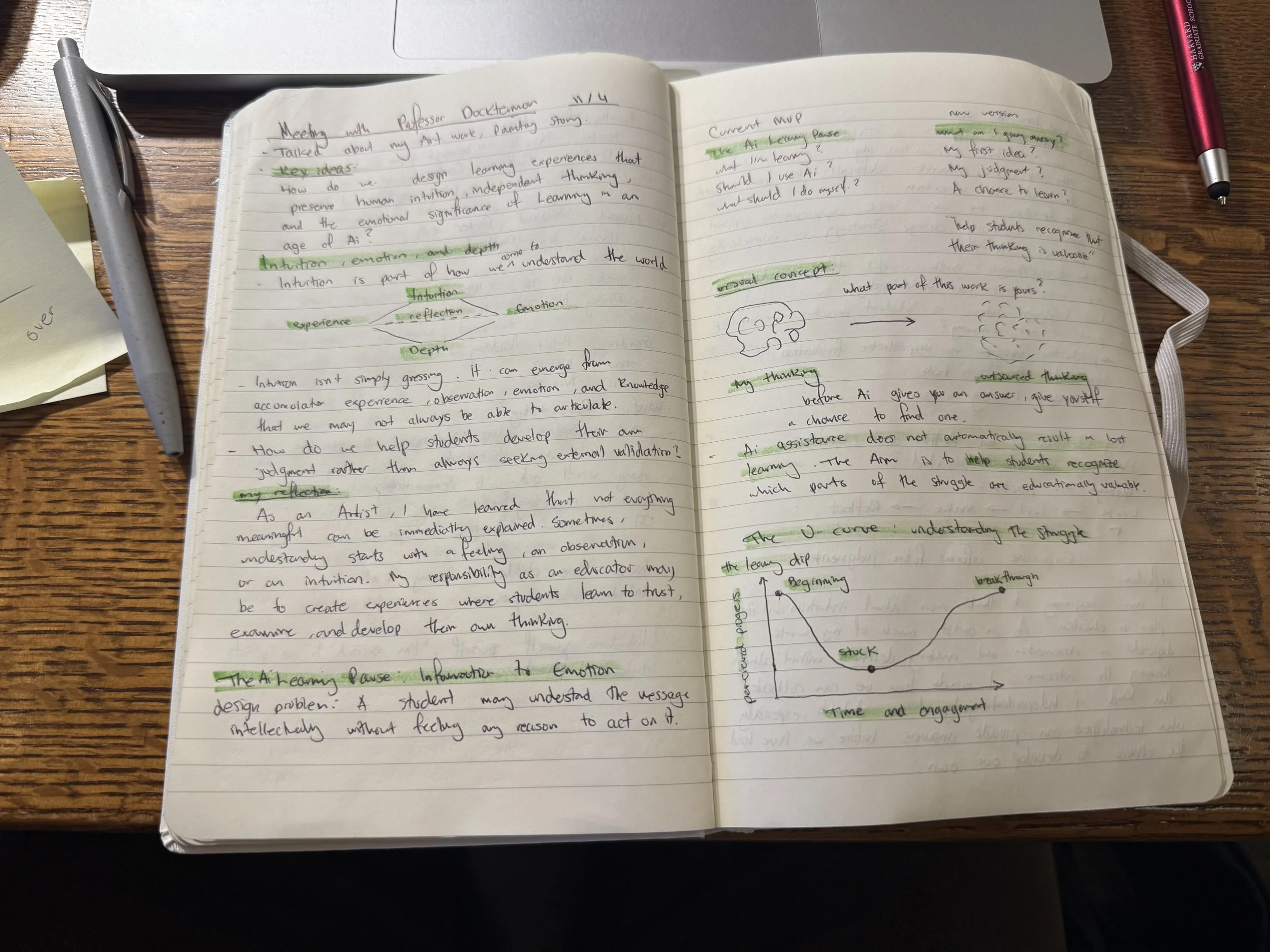
Reflections on intuition, learning, and the development of independent judgment.
This question feels especially relevant as artificial intelligence becomes increasingly present in our daily lives. Much of my current work in learning design has involved examining how students engage with AI, particularly in their own learning and intellectual development. I find these technologies fascinating, and I see tremendous possibilities in how they might support education. They can help us understand unfamiliar ideas, introduce new perspectives, and offer assistance when we encounter difficult problems. At the same time, I cannot help but wonder what happens when we start turning to them before giving ourselves a chance to think.
There is something worth considering about the experience of being stuck. As a painter, I know how uncomfortable it can be to encounter a problem without immediately knowing how to resolve it. Sometimes I want nothing more than to find a solution and move forward. Yet I have also learned that these frustrating moments can lead to discoveries I would never have made otherwise. They encourage me to look again, reconsider my assumptions, or try something entirely different. Of course, not every struggle is productive, and sometimes we genuinely need guidance or assistance. But perhaps part of learning is developing the judgment to recognize when we need help and when we might benefit from spending a little more time with the problem ourselves.
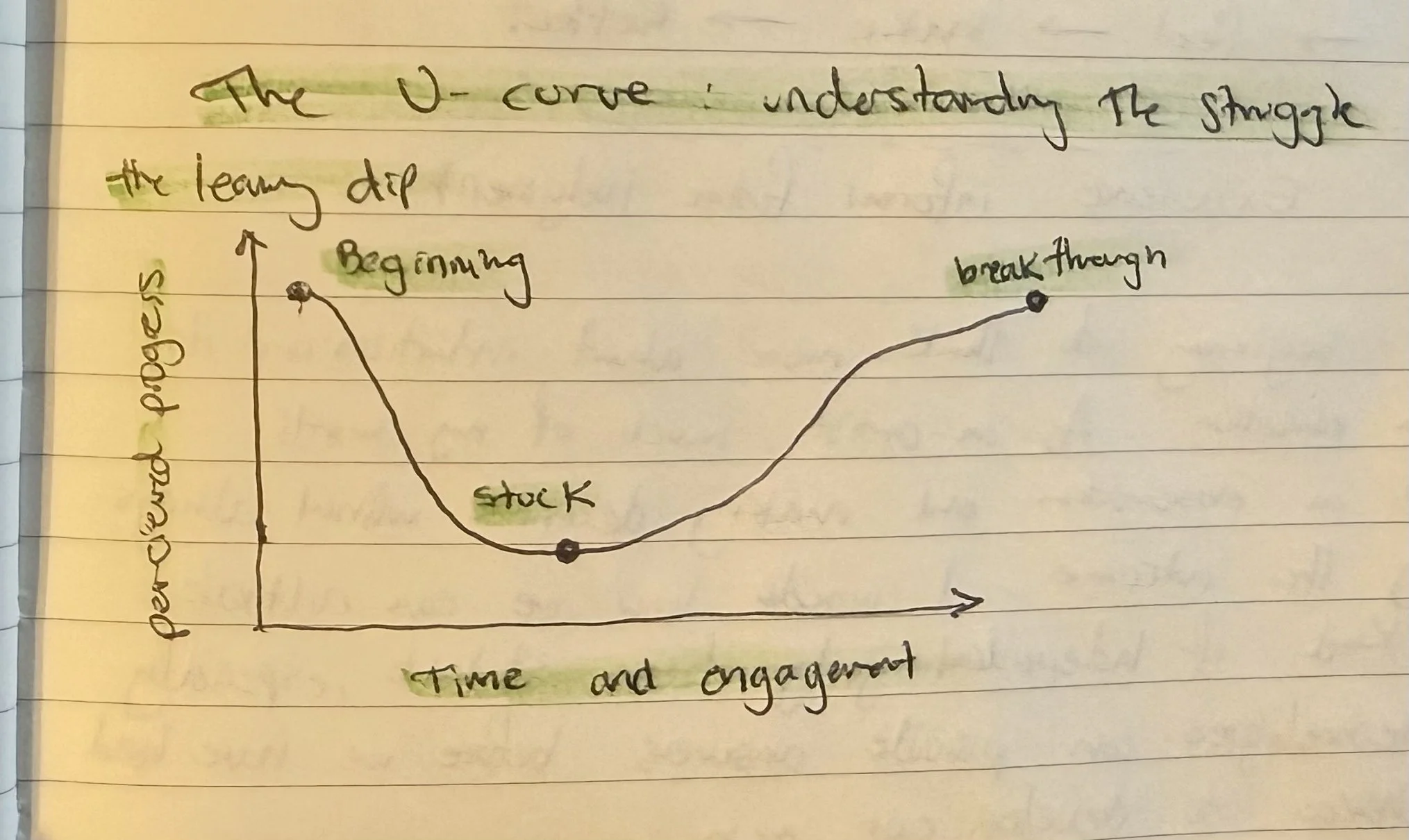
I think this is one of the questions that interests me most about AI and education. If we become accustomed to receiving immediate answers, will we still give ourselves the time and patience necessary to develop our own ideas? How will we know what we genuinely understand if we rarely experience the process of arriving at an understanding ourselves? I don’t think the answer is to reject technology. Rather, I wonder how we might learn to use it while staying conscious of what we want to develop within ourselves. Perhaps the challenge isn't simply knowing when to use AI, but recognizing what we might be giving up when we let it do something we could have attempted on our own.
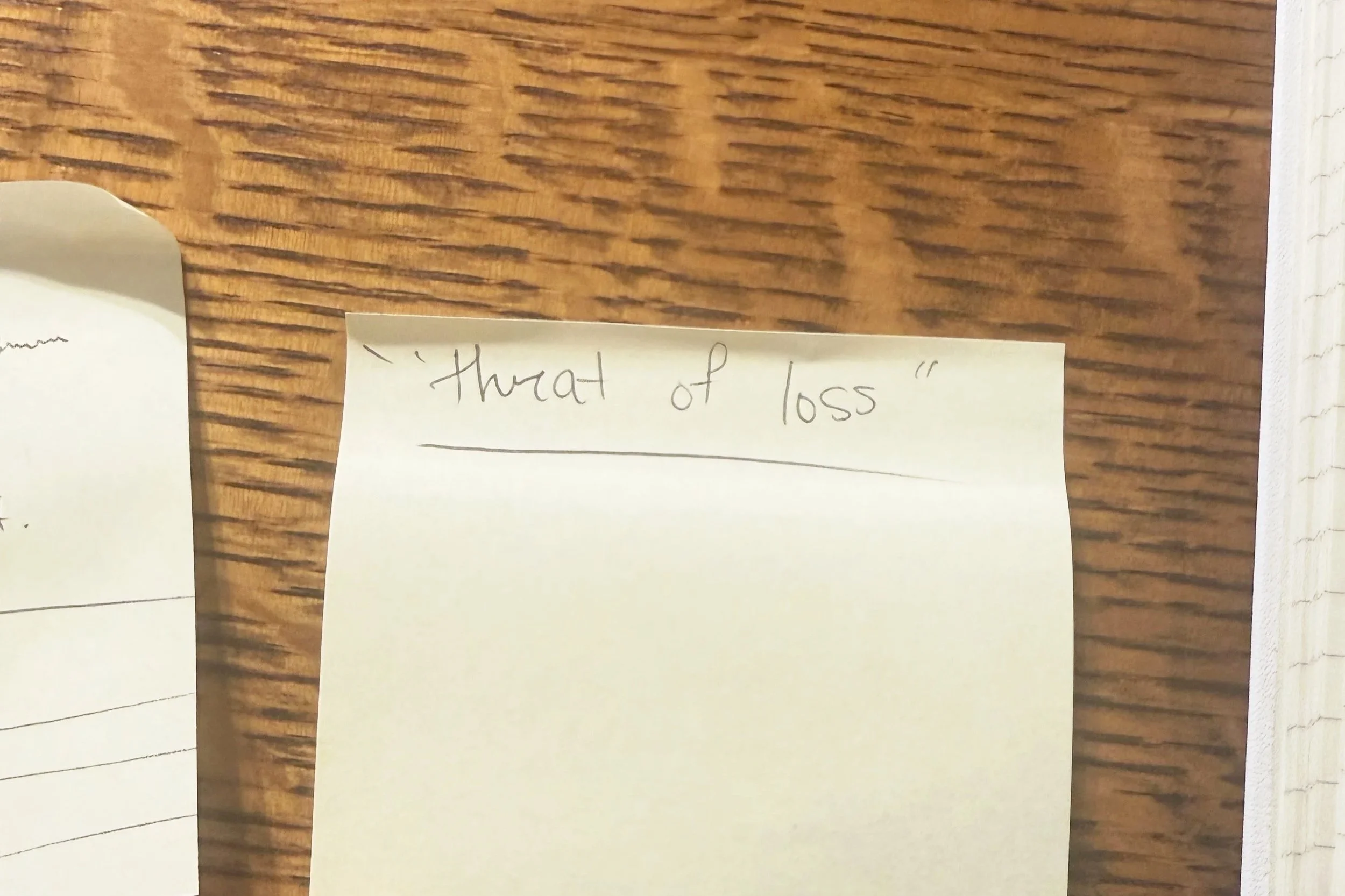
Considering what we gain, and what we might lose, when we delegate our thinking to AI
This has also made me think more carefully about the relationship between emotion and learning. We often speak about education in terms of knowledge, skills, and measurable outcomes, but our experiences as learners are also deeply emotional. We feel pride when we accomplish something difficult, disappointment when we fall short, and excitement when an idea suddenly makes sense. These experiences shape how we understand ourselves and what we believe we can do. I wonder how often we consider this emotional dimension when designing educational experiences, especially with technologies that promise to make learning faster and more efficient. Efficiency certainly has value, but I am not convinced the most meaningful experiences in life are always the most efficient.
Perhaps this is also why I have become increasingly interested in the relationship between art and education. My identity as an artist has shaped the way I approach the world, and I am beginning to recognize how much it influences the kind of educator I hope to become. I want to create experiences where students feel comfortable exploring their own ideas, take risks without being overwhelmed by fear of being wrong, and recognize that their observations and perspectives have value. I want them to understand that learning is not simply about acquiring information, but also about discovering something about themselves through the process.
I left Professor Dockterman’s office with more questions than when I arrived, which I think is a wonderful outcome of a conversation. What began as a discussion about my paintings became an opportunity to think more deeply about intuition and the importance of developing our own judgment. I am grateful for conversations like these, especially when they encourage me to examine something I had previously taken for granted. It reminds me that some of the most valuable things we learn come from being willing to question what we think we already understand.
I suspect I will continue thinking about intuition for a very long time. The more I consider it, the more I realize how closely it is connected to my experiences as a painter, my curiosity about the world, and the questions I am beginning to ask as an educator. I still cannot offer a clear definition of what intuition means to me, and perhaps I don’t need to arrive at one just yet. For now, I am interested in paying closer attention to the moments when it appears, what those moments might reveal, and how experience continues to shape the decisions we make.
One question in particular I hope to carry with me, both into the studio and into the classroom.
Can we teach intuition, or can we only create the conditions for it to develop?