
Drawing Aliveness: Learning to See Ourselves in Nature
Reflections on slow looking, art, attention, and what it means to be human.
It's odd to be human nowadays. We have become incredibly skilled at moving quickly, in producing things, in communicating over long distances, and in filling up almost every spare moment. Yet at times I question whether, having acquired all this speed, we have overlooked something much older and much simpler. “How to look”.
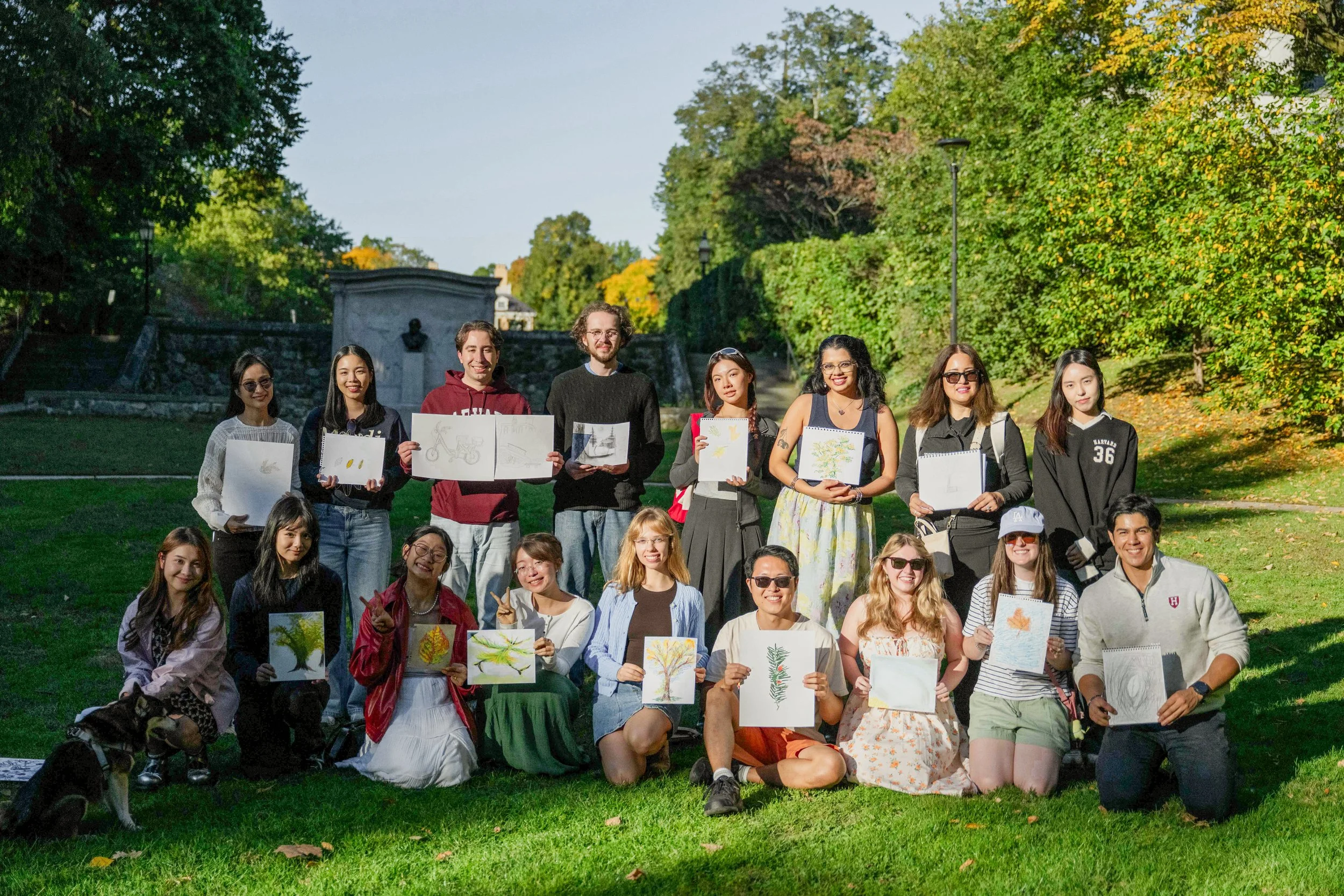
On October 3rd The Butterfly, which is our art club at the Harvard Graduate School of Education, met in Longfellow Park in Cambridge for an afternoon that we termed Slow Looking: Drawing Aliveness. We didn't come together with the aim of improving our drawing skills, nor was there any expectation that anyone would produce something beautiful, let alone that perfection would be achieved. Rather, we started with a much simpler request: go outside, locate something that captures your interest, spend some time with it, and then see what takes place.
The concept of aliveness was intentionally left open to interpretation. We considered it in terms of four related qualities: presence, agency, connection, and belonging. In this sense, being alive meant becoming aware of one's body and the environment, deciding where to direct one's attention, relating to the natural world and to the people nearby, and possibly feeling oneself as part of something bigger. These had never been meant to be definitions, but rather invitations.
For years I have studied nature as a painter. This has included birds, landscapes, trees, faces, and light. I have learned that there is a great difference between seeing something and actually looking at it. A tree can continue to be no more than "a tree" until I decide to paint it. At that moment it suddenly breaks down into hundreds of smaller realities—such as the direction of a branch, the spaces between the leaves, the temperature of a shadow, and the slight variations in colour and texture. The tree itself hasn't changed, but my attention has.
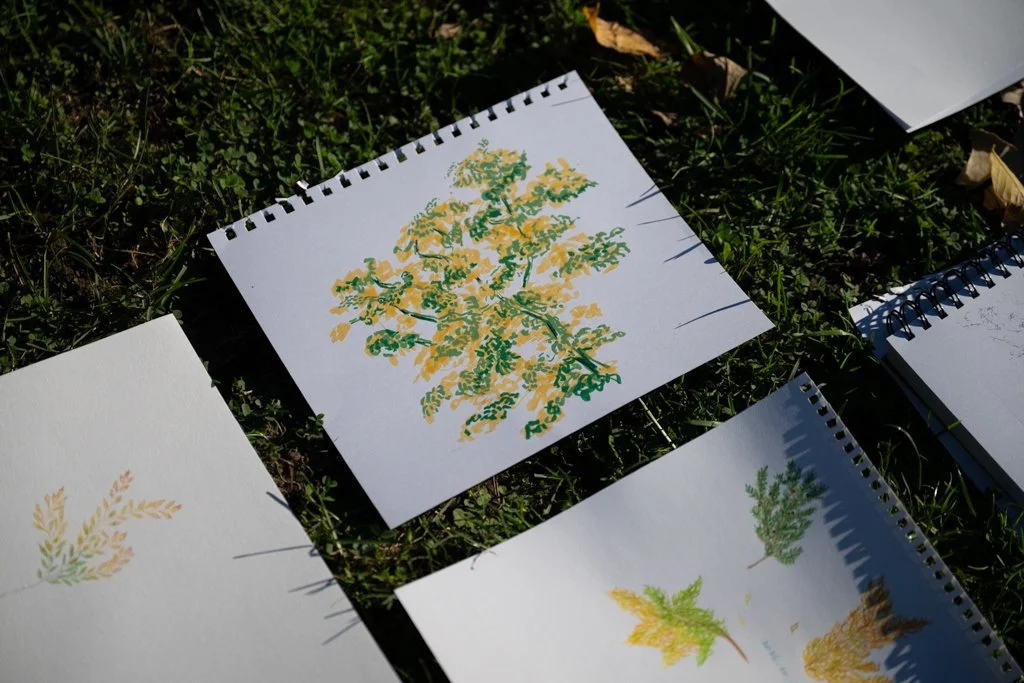
This question is now at the heart of my practice-based research at HGSE. I have been investigating how an arts experience for adults could be designed around three closely linked concepts: slow looking, perception, and making in and with nature. The more I have studied observation, the less passive it appears. Looking is an action that we perform, but it may also be something that we can learn to carry out in a different way.
Observational drawing is a good example of this. Reichertz and his colleagues compared people who started drawing right away with those who first spent some time observing before beginning to draw, and also with those who described in words what they saw before they drew. Interestingly, the researchers discovered that delaying drawing produced the highest average improvement in drawing accuracy, and that more detailed verbal descriptions were also linked to greater accuracy. I find it quietly beautiful that this is the case. Maybe, before doing more, we sometimes need to stay with something for a longer period of time.
Yet that afternoon I found myself considering something even more basic than drawing. We usually talk about "going into nature" as if nature were in some other place. Once we leave our buildings, cross a street and go into a park, we at once declare that we have reached nature. But where were we before that?
We are animals too.
We breathe, we eat, we sleep, we look for warmth, we feel frightened, we play, we touch, and we gather together. Our bodies react to sunlight, temperature, sound, movement, and to the presence of other living organisms. However sophisticated our technologies may become, the human being has never ceased to be part of the living world.
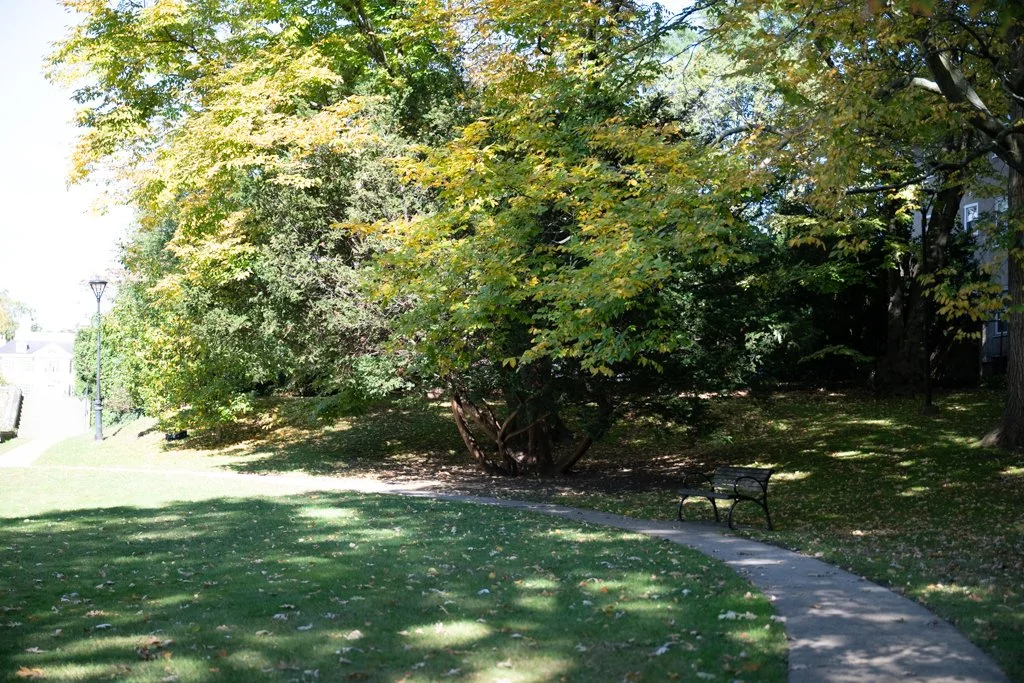
When I think of ourselves in this way, the idea of drawing in nature changes for me. Nature is not just a beautiful subject that stands before us. A tree is not simply an object that is waiting to be depicted. A bird is not merely a shape that moves across the composition. We come across other forms of life at the same time as we are living our own lives. It may be for this reason that attention can seem so intimate. Whenever I give something my full attention, I am recognizing that it exists beyond its value to me. And perhaps that is one small way of showing love.
There is also evidence to show that artistic experience is connected with the way our visual attention functions. Rebecca Chamberlain and Johan Wagemans discovered relationships between observational drawing ability and the processing of both local details and the larger global visual information. Their study indicates that artistic experience and drawing ability are linked to different kinds of attentional flexibility—that is, the ability to shift between seeing individual details and perceiving the overall shape.
This is particularly significant when it comes to life, since in real life we are asked something comparable. We have to notice the leaf, but at the same time we have to see the tree. We have to recognize ourselves as individuals yet realize that we are part of communities. We have to attend to our own lives without overlooking the people, animals, places, and ecosystems on which those lives depend.
At the event we deliberately gave simple instructions: to arrive, look, draw, share and reflect. The participants were free to wander or to sit down, to find something that caught their interest, to draw what they had noticed, and then to go back and share it and reflect on it. It wasn't necessary for the drawing to be completed, beautiful or even identifiable. The part about the SlowLooking template was important to me.
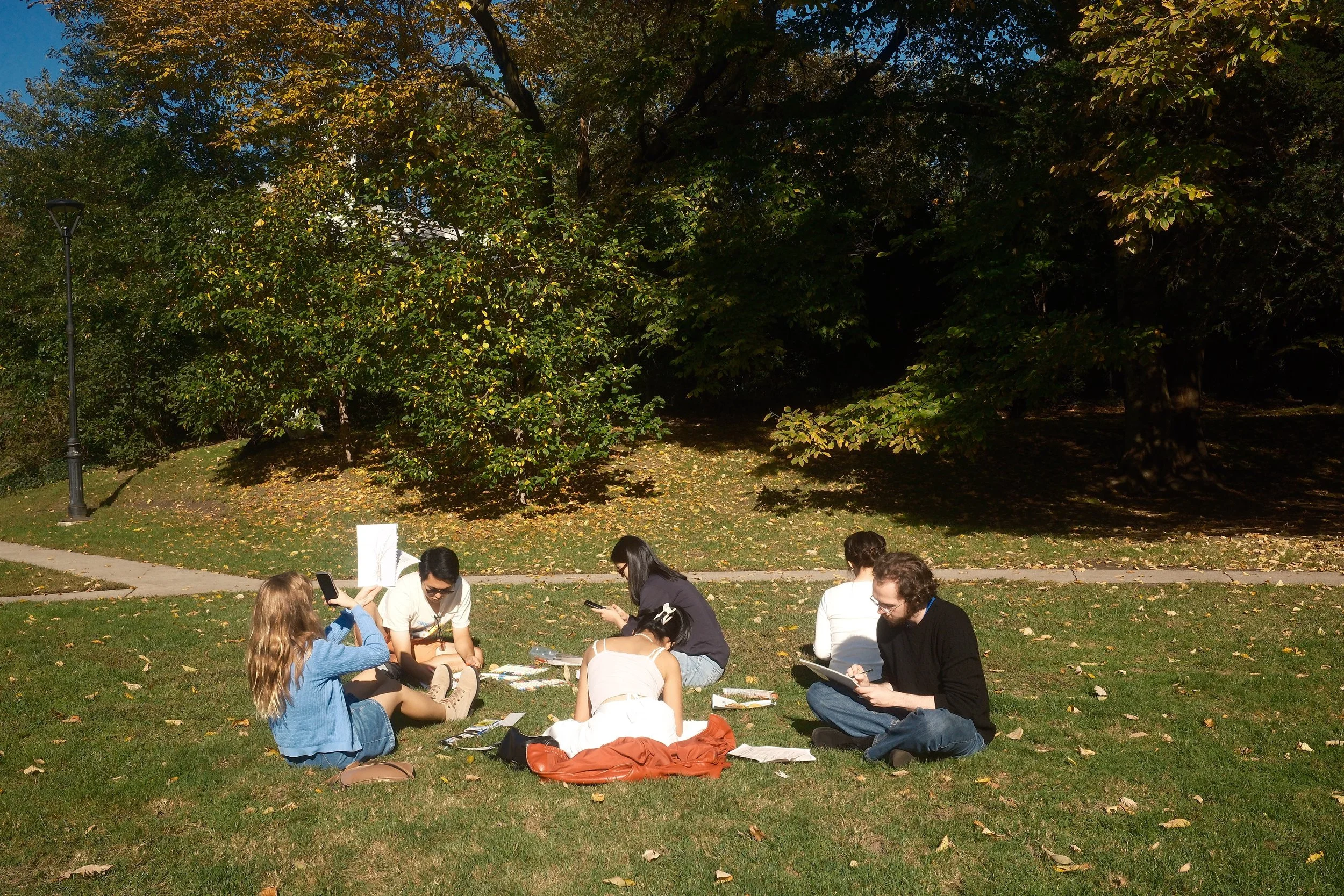
A large part of our lives is based on outcomes. We create something because it has to be assessed, submitted, posted, sold, graded, improved, or made useful. But what if creation is permitted to take place without immediately having to prove its value? Maybe a drawing could just serve as evidence that, for a short time, someone has paid attention.
When I set up The Butterfly, my aim was not to establish an art club that was only about making art. I wanted to create opportunities which would enable people to come together because of art. Ever since the beginning, we have strived to place a priority on curiosity, observation, connection and the creative process rather than on perfection.
It is not merely something that we have, but rather, it is something that we have to practise. We practise it when we become curious about something which we do not understand. We practise it when we listen to someone else telling us about something that we have completely overlooked. We practise it when we permit ourselves to not know. We practise it when we make something without being concerned as to whether it is impressive. And maybe we practise it when we look after the living world not just because it is useful to us, but because we realize that we belong to it.
Art can set the stage for such things to occur. It is not because art automatically leads to us becoming better people, nor because slowing down has the same effect on all individuals. In fact, this point has become important to me as a researcher. I don't want my research to start from the assumption that slow looking is necessarily advantageous. One person may become more attentive, another may feel restlessness, and a third might notice sounds, emotions, or bodily sensations rather than visual details. I would like those different responses to stay possible. My duty is not to tell people what they should find, but rather to prepare the conditions for an experience and then pay close attention to what in fact arises.
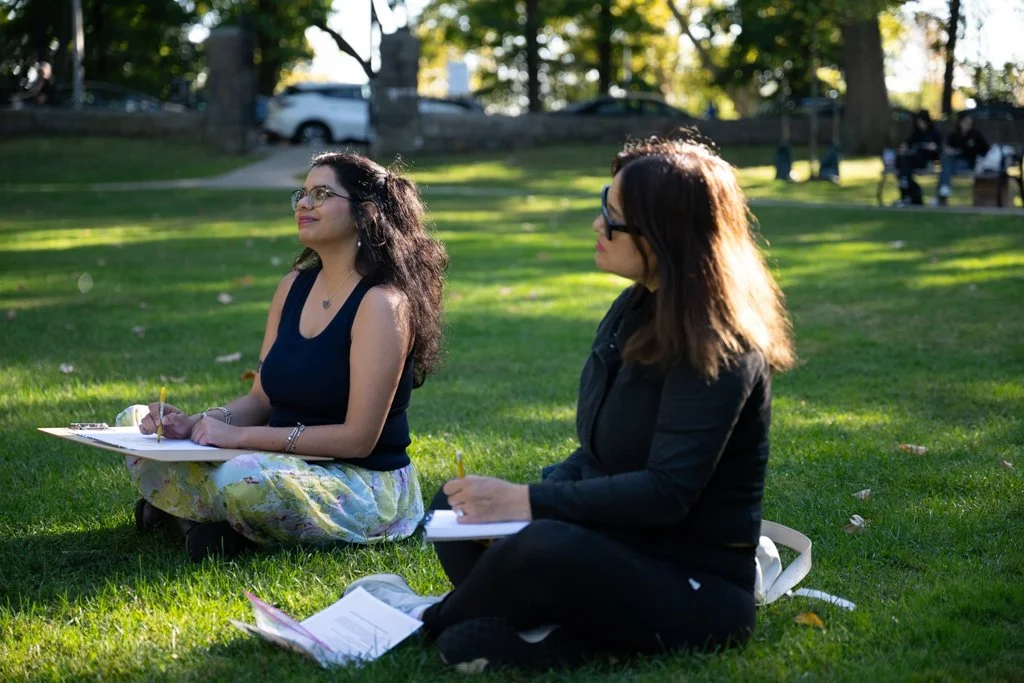
By the end of the afternoon we had come back to each other. Each person had gone in a different direction and had therefore noticed different things. Although we had been in the same area, we had not necessarily had the same experience of it. I think that's beautiful. Slow looking doesn't mean that we all see the same thing. It may in fact show just how differently each of us sees. Art thus provides us with a means of sharing some part of that way of seeing with another person.
To me, the concept of aliveness takes on a significance that goes beyond mere observation. Presence has the potential to result in connection and attention is directed outward. The person who is drawing starts off in a relationship with a leaf, a branch, a shadow, a sound, or a patch of light, but eventually comes back to the group of other people who have also been looking. For a short time, we weren't aiming for any particular destination but were just people being together outside: looking, drawing, talking and listening. We were animals among animals. Life among life.
At the start of my research I had been mainly concerned with observation and now beginning to think that it might also have something to do with relationship—namely, the relationship between eye and hand, between detail and the whole, between artist and subject, between one person and another, and between the human being and the wider living world among which we have never actually been separate.
I don't yet fully understand what slow looking entails, and I'm glad that I don't. There is still going to be further participant conversation, some drawings to go over, reflections to think about, and questions which are likely to give rise to further questions. My duty as a researcher is not to ensure that the experience confirms my existing beliefs and rather to listen carefully so that the experience can challenge those beliefs. Yet as an artist I keep coming back to a far simpler idea: I think that attention is important. When you look carefully at a bird, a tree, another person, or at a shifting patch of light, you are in a way resisting the notion that everything has to be glanced at quickly.
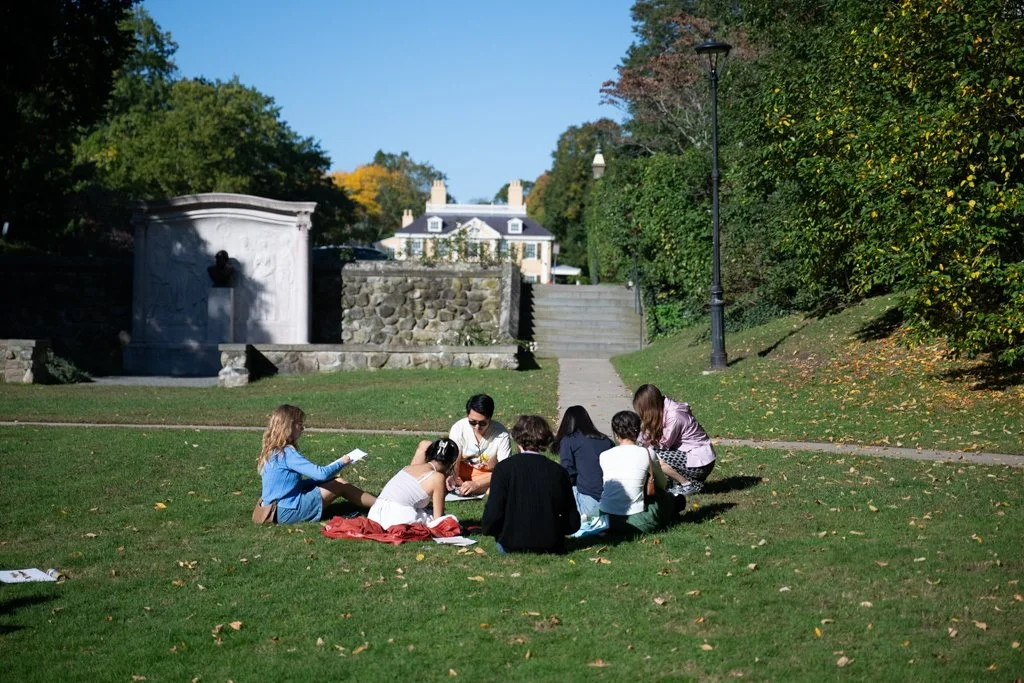
It isn't necessarily true that protecting our humanity has to start with something huge and at times it might just involve sitting under a tree, looking around, and staying there long enough for the world to once again become strange and beautiful.
Before we create, we first learn to see.
References
Chamberlain, R., & Wagemans, J. (2015). Visual arts training is linked to flexible attention to local and global levels of visual stimuli. Acta Psychologica, 161, 185–197. https://doi.org/10.1016/j.actpsy.2015.08.012
Reichertz, M., Christie, J., Maycock, B., Wong, J., & Klein, R. M. (2021). How do I know what I see until I hear what I say? International Journal of Art & Design Education, 40(2), 449–465. https://doi.org/10.1111/jade.12356
Tishman, S. (2018). Slow looking: The art and practice of learning through observation.