
The Calm Before the Storm
On learning to see, the value of art, and what we owe the next generation.
Last Friday, shortly after arriving in New York City from Cambridge, I witnessed one of the most extraordinary sunsets I have seen in quite some time. The sky was almost entirely consumed by orange, with layers of crimson, yellow, and violet stretching across the horizon. It genuinely looked like a painting. I remember standing there in complete awe, wondering how something so beautiful could exist so effortlessly above us while the rest of the city continued with its evening. With a storm approaching New York that weekend, there was something particularly moving about witnessing such beauty before the arrival of something so unpredictable. I took several photographs, knowing almost immediately that I wanted to revisit this moment through painting. That evening became the inspiration for my latest work, The Calm Before the Storm. As I began working on the canvas, I wasn't particularly interested in reproducing the photograph. I wanted to return to the experience itself, to understand what had moved me in the first place. Through thick layers of orange, red, and yellow, I allowed the brushstrokes to move freely, responding to one another as the composition gradually emerged. Some decisions were deliberate, while others came unexpectedly. I found myself negotiating between what I had observed, what I remembered, and what the painting was gradually becoming. In many ways, the process reminded me why I began painting in the first place which was to better understand the world and my place within it.
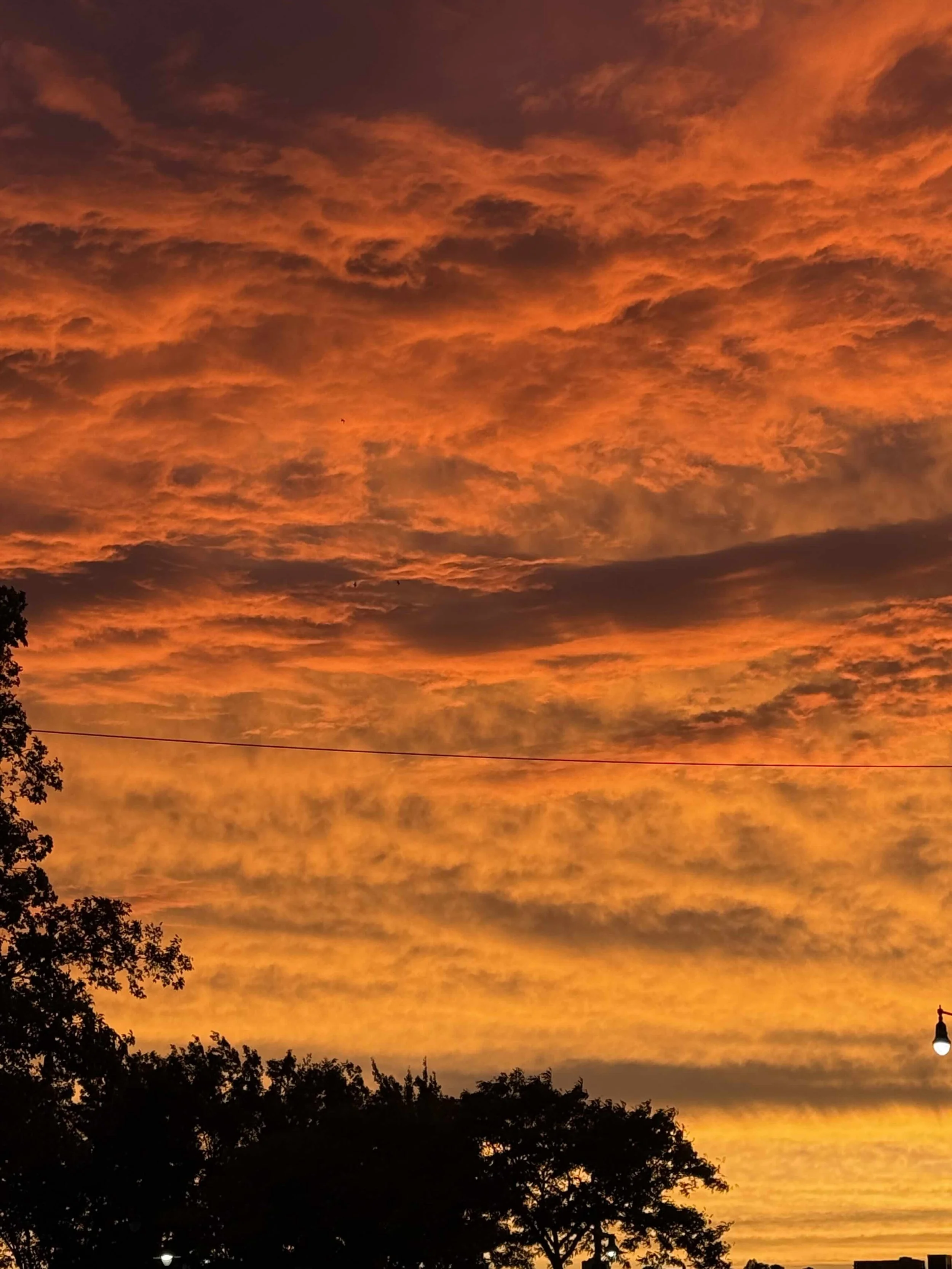
For a brief moment, the sky became a painting, and all I could do was admire it.
Since beginning my graduate studies at the Harvard Graduate School of Education, I have found myself thinking more deeply about the relationship between art and learning. As an artist, nature has always been one of my greatest teachers. Whether through painting landscapes, or simply spending time outdoors, I have come to appreciate how much there is to discover when we allow ourselves to look more carefully. Yet, I am also beginning to recognize that seeing and paying attention are not necessarily the same thing. We can look at something without truly observing it. We can photograph a beautiful landscape without taking the time to experience it. And perhaps, in a world where so much of our attention is constantly being demanded, we are gradually becoming accustomed to moving through experiences without allowing ourselves to fully inhabit them. Through my studies in Arts & Learning, particularly our explorations of perception, play, materiality, and contemporary approaches to arts education, I have become increasingly interested in the value of slowing down. What happens when we invite someone to spend ten minutes observing a tree before attempting to draw it? What might they notice about its structure, movement, texture, or relationship with its surroundings? More importantly, what might they discover about themselves through that experience? Perhaps the value of art is not always found in what we produce, but also in the attention, curiosity, or feelings and understanding we develop along the way. I often return to a belief that has become central to my own practice which is paying attention is a way of showing love. To observe something carefully is, in some sense, to acknowledge that it is worthy of our time.
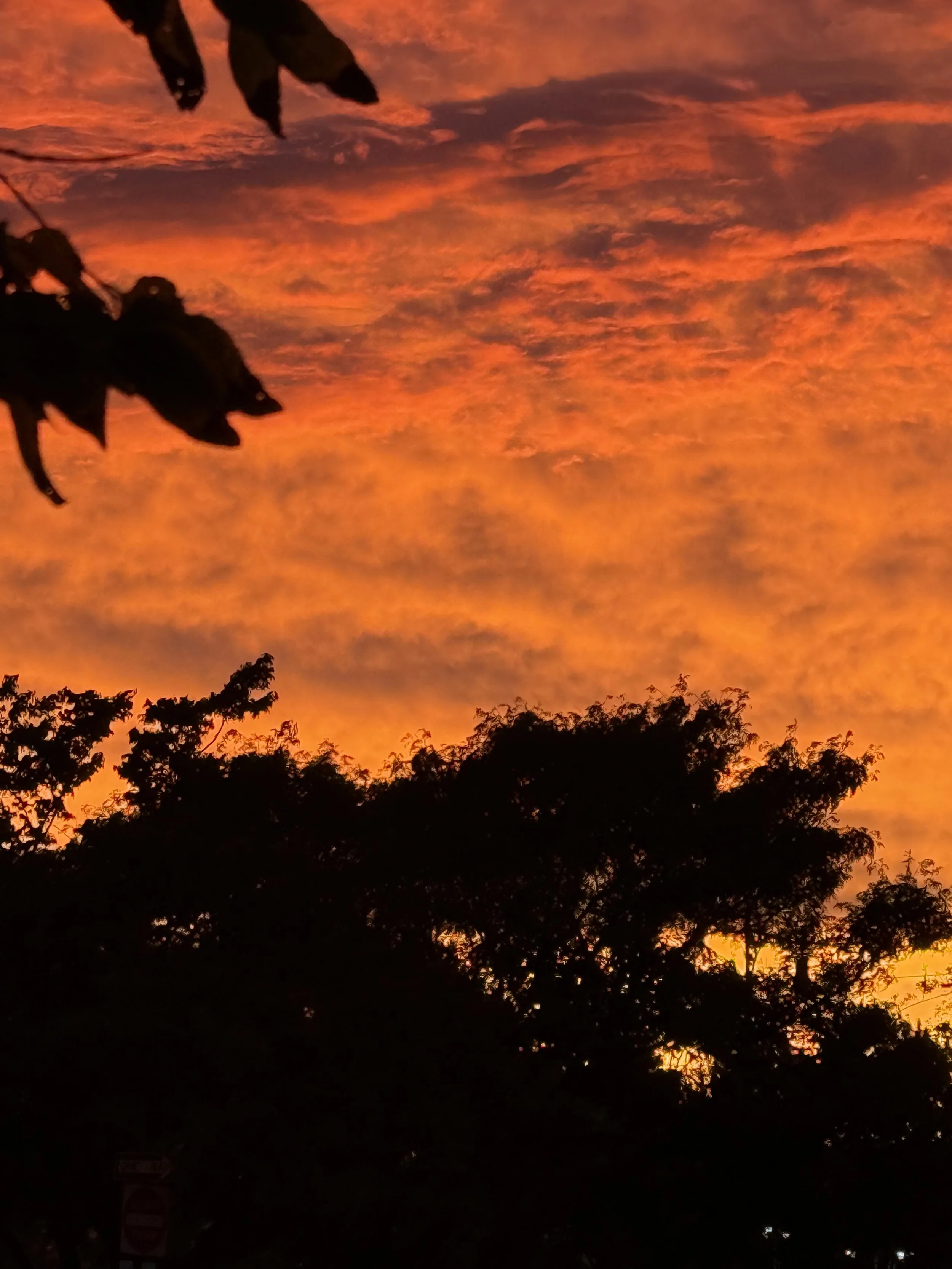
Before we teach the next generation how to create, perhaps we must first teach them how to see.
These reflections feel particularly important to me as we navigate a period of remarkable technological advancement. Artificial intelligence is rapidly changing how we create, communicate, and learn, and while I find many of these developments fascinating, I also believe they invite us to reconsider what we value in the human experience. When an image can be generated within seconds, what becomes of the hours spent observing, experimenting, struggling, and learning to paint? When information is available almost immediately, how do we continue to cultivate the curiosity that encourages us to ask our own questions and pursue our own discoveries? I don't believe that technology and creativity need to exist in opposition. Rather, I think we have a responsibility to consider what kinds of experiences we want to preserve and nurture alongside these advancements. Making art is not simply a matter of producing an image or reaching a desired outcome. It involves an ongoing relationship between our intentions, our materials, our environment, and the unexpected. We make decisions, encounter resistance, change direction, and sometimes discover possibilities we could never have anticipated. There is something deeply human about this process, particularly in allowing ourselves to be uncertain and vulnerable to what might emerge. I believe artists have so much to contribute beyond the studio or gallery, not only through the works we create, but through the ways our practices can encourage others to observe, question, imagine, and make meaning from their own experiences.
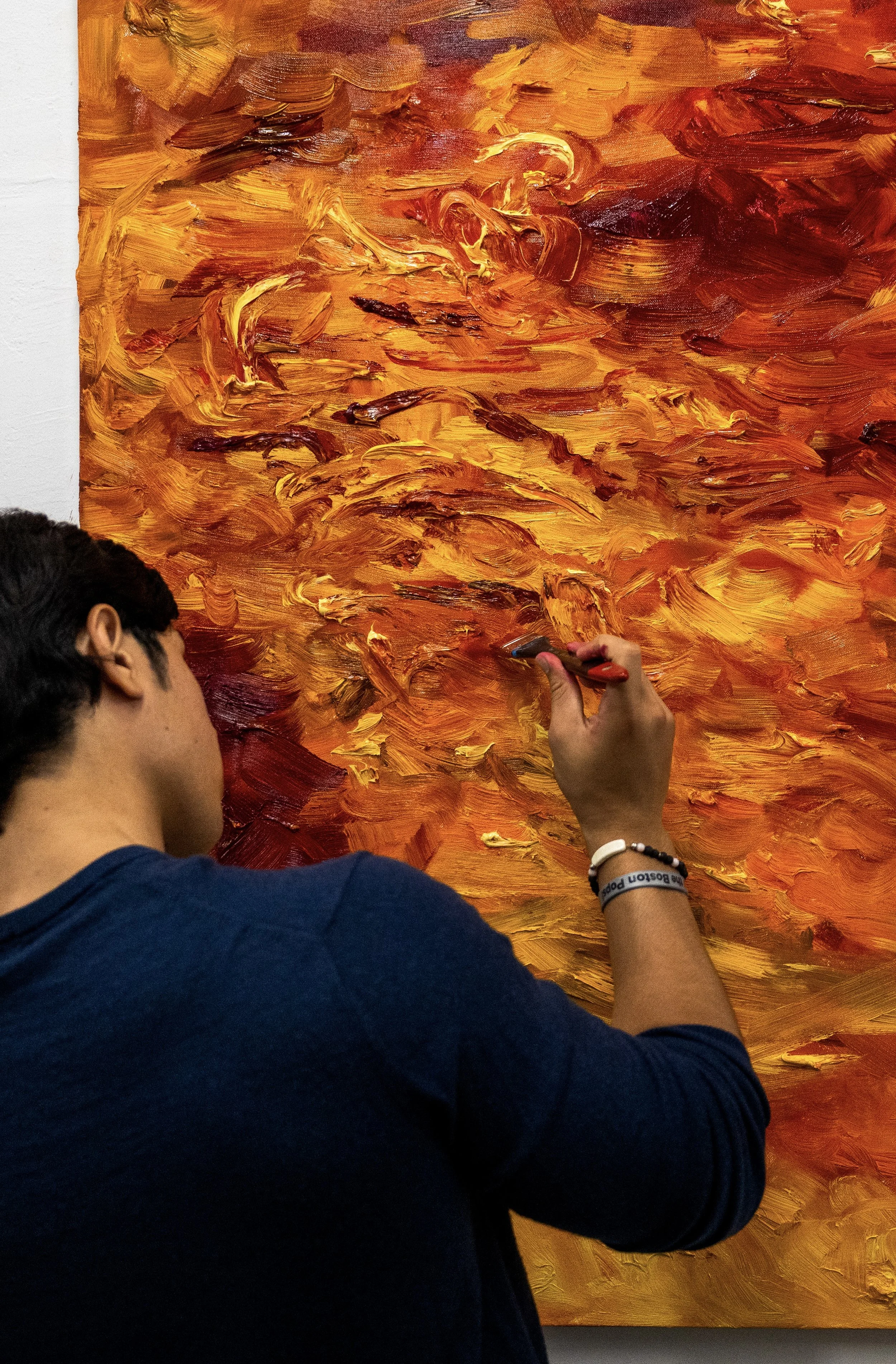
I paint not simply to recreate what I see, but to understand what I feel.
Perhaps this is what has made my journey at HGSE so personally meaningful. I entered graduate school wanting to explore how my artistic practice might contribute to education, but the more I learn, the more I realize how deeply these two worlds belong together. I have become particularly interested in how we might design learning environments that value exploration, imagination, and the individual experiences learners bring with them. Children, in particular, have so much to teach us about curiosity. They collect things, ask questions, experiment with materials, and often find fascination in the smallest details of their surroundings. A fallen leaf, an unusual stone, or the changing color of the sky can become the beginning of an entirely new discovery. I wonder how often we make enough room for these experiences, especially within educational environments where learning can become so closely associated with measurable outcomes. What if we encouraged children to spend more time observing the natural world, not necessarily because they must produce something beautiful or demonstrate a particular skill, but because the experience itself has value? What if we allowed them to explore materials without always knowing what the finished work should look like? I am increasingly drawn to the idea that arts education can offer children opportunities to develop their own ways of seeing, to become comfortable with uncertainty, and to recognize that their individual interpretations of the world matter.
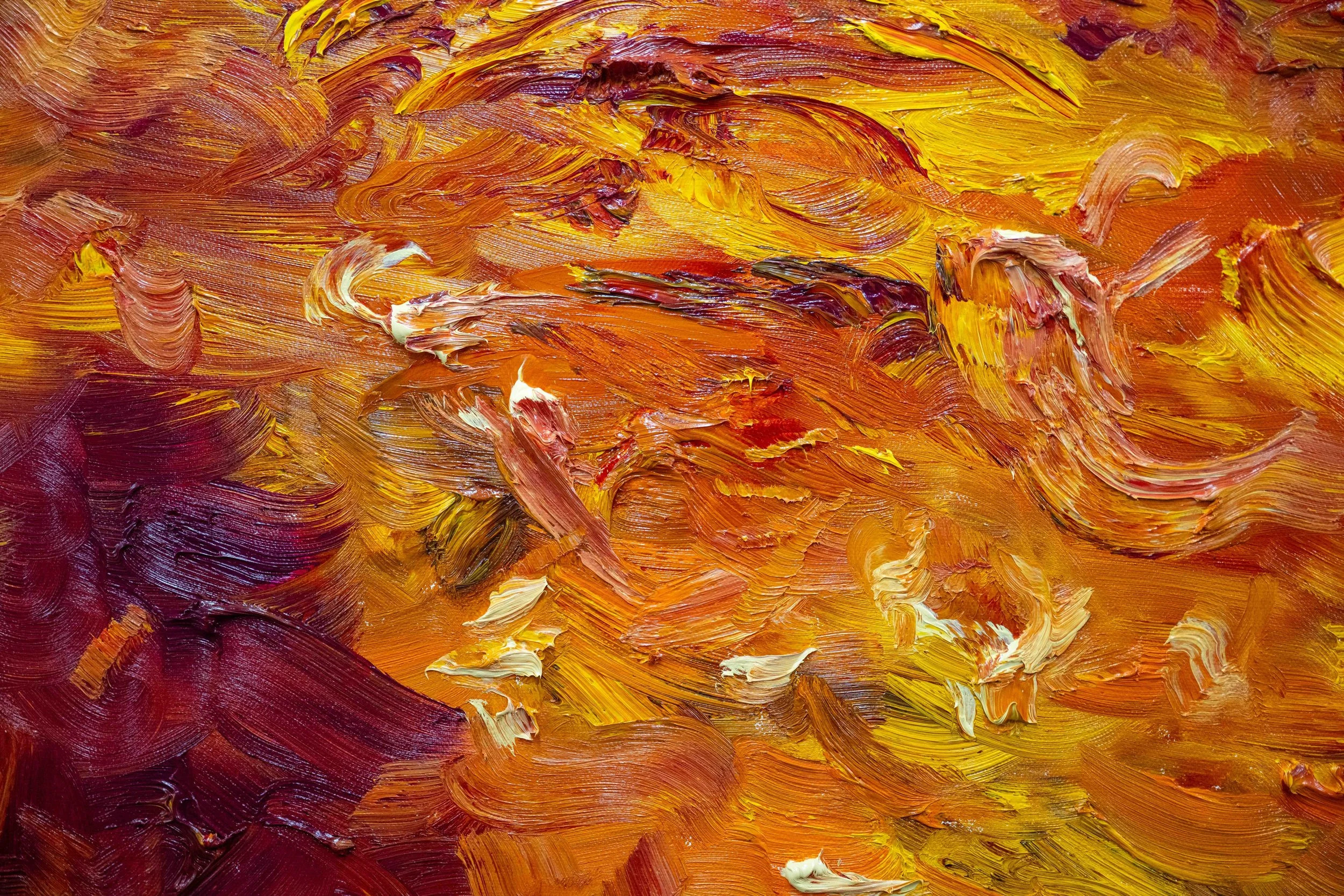
What began as a moment of observation became something I could carry with me.
This belief has also informed my involvement with “The Butterfly”, our student art club at HGSE, where we have been creating opportunities for people to gather and make art together in various places around campus. What I find particularly meaningful about these experiences is that they remind me that creativity does not need to be reserved for those who identify as artists. There is something wonderful about watching individuals approach the same materials or environment in entirely different ways, each bringing their own memories and curiosities into the process. It has made me think about the kind of educator I hope to become, and the responsibility we share in nurturing the next generation. I don't believe every child needs to become an artist, but I do believe every child deserves the opportunity to experience what art can offer. We owe them the freedom to explore, to work with their hands, to make mistakes, to connect with nature, and to discover meaning beyond what is immediately presented to them. We should allow children the opportunity to lose themselves in the experience of making, and perhaps, through that process, find something of themselves. To me, this is not simply about teaching art as a subject, but recognizing artistic experience as an important part of learning what it means to be human.
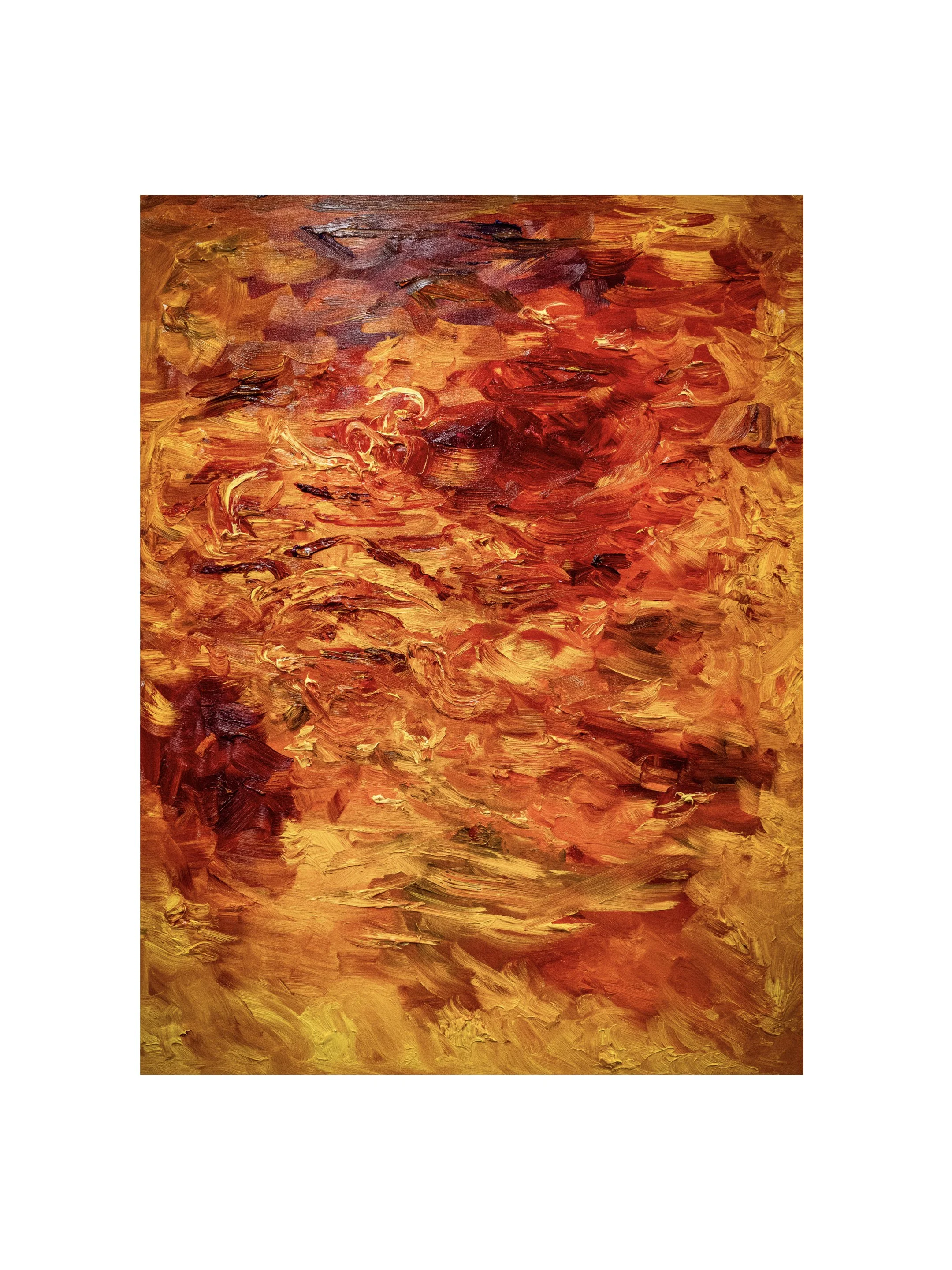
The Calm before the Storm, Kareem Moumina, 2026, New York
Looking back at the sunset in New York, I find myself thinking about how easily I could have missed it. I could have continued walking, looked down at my phone, or simply taken a photograph and moved on. Instead, I found myself wanting to stay with that moment a little longer. What began as a brief encounter with nature eventually became a painting, but it also reminded me of the direction I hope to pursue through my work as both an artist and an educator. I want to continue exploring how art can bring us closer to the world around us and how these experiences might help others develop a deeper sense of curiosity, connection, and belonging. As technology continues to reshape our lives, I hope we remain equally committed to cultivating the parts of ourselves that allow us to wonder, imagine, care, create and most importantly love. We have a responsibility to give future generations the space to discover these things for themselves, not by telling them what they should see, but by encouraging them to look. Because long before a child learns how to make something beautiful, I hope we can help them recognize that there is already so much beauty worth noticing.
“And sometimes, all it takes is looking up”