
On the Art of Being Alive
Reflections on nature, mortality, and the goodness of being human
There are times in your life when you just wonder what all of it is for. We spend so much of our lives striving for something, chasing our ambitions, going through all sorts of hardship, building up relationships and trying to find some kind of purpose in it. The world carries on regardless of what we achieve, and time just flows by with no particular regard to what we've managed to do. There comes a point at which you can genuinely come to the conclusion that there's no point at all to it (at least not in the way we've been brought up to think of purpose). I've certainly had that thought at various times in the past, but I can't really accept it. I'm a man of faith and I believe that our physical existence is not the end of the story and that there is a life after this one. That belief is what gives me a sense of responsibility to do good in the world, to be a good person and to make the most of the time we have. I've still always wondered whether we spend so much of our lives in the pursuit of the meaning of life that we end up missing the point entirely. Perhaps the meaning isn't something we discover at the end of a long philosophical journey. Perhaps it's something we experience in the very act of being alive, in the people we meet, the places we go and in the simple act of being in the world without any expectation of anything in return. I've been mulling all of this over quite a bit recently as I settle into this new phase of my life in Cambridge. My studies, my art and the wonderful people I've met have all started to change the way I think about what it is to live.
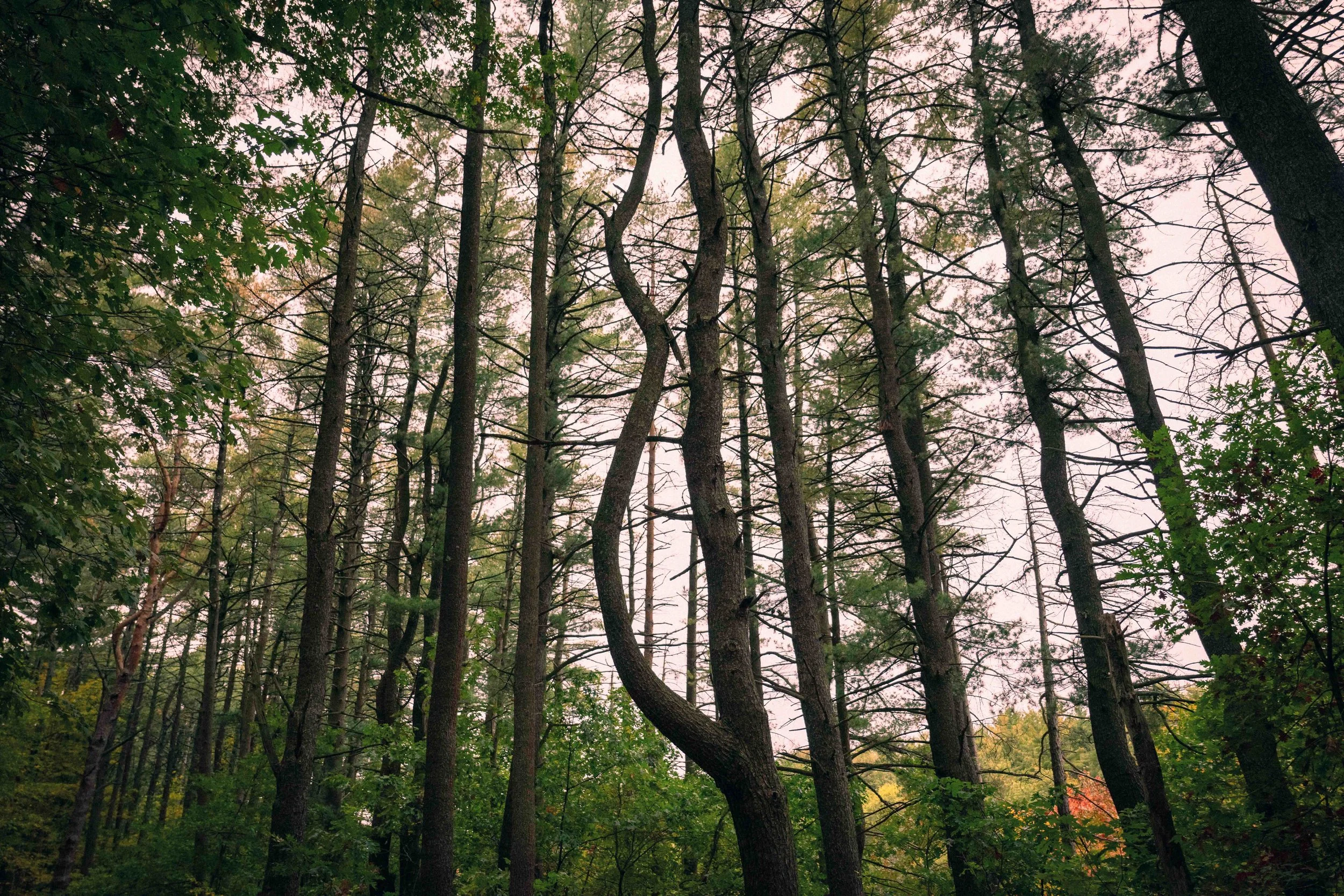
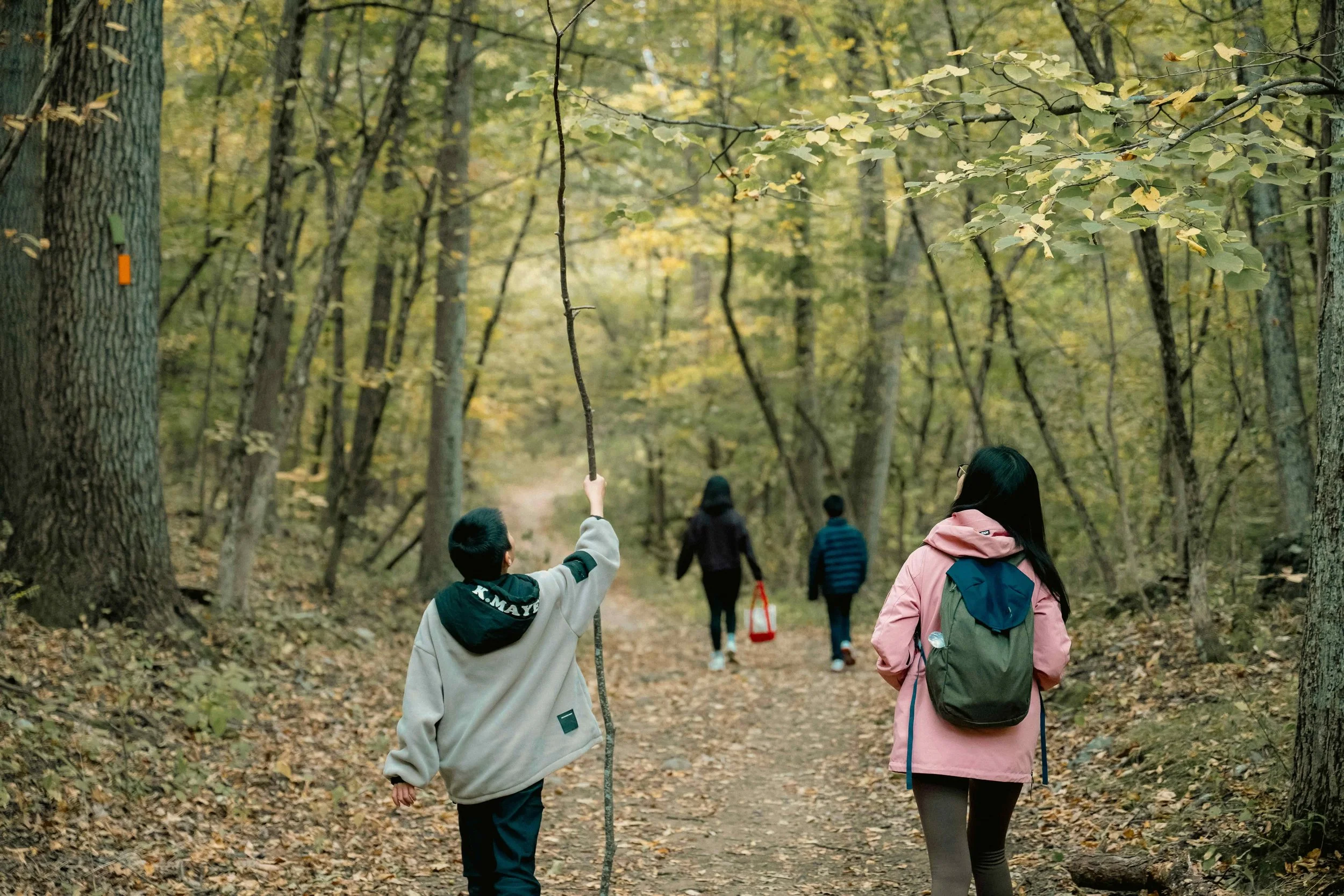
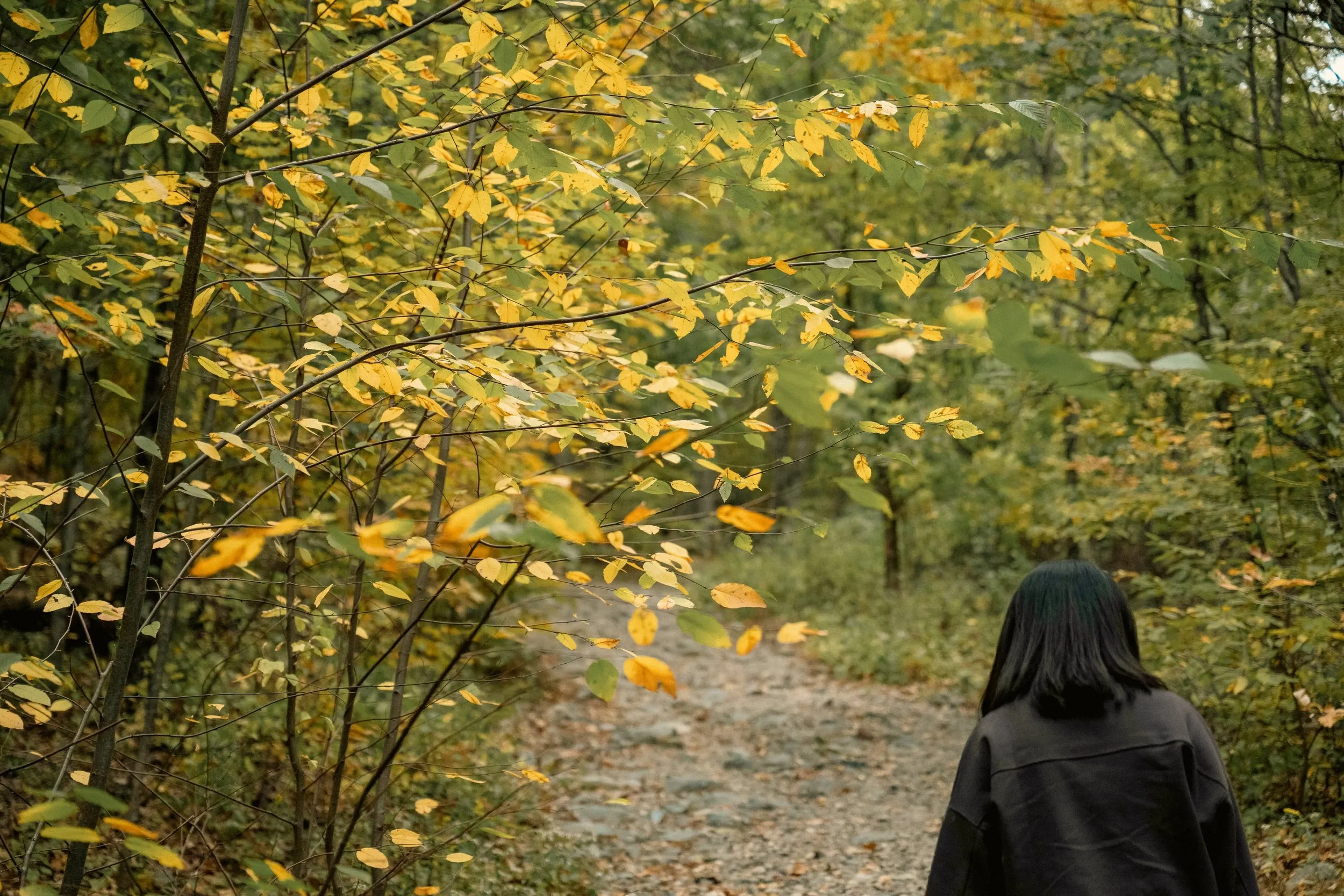
I'm writing this as a result of a Sunday which was absolutely one of the most uplifting and grateful days of my life. A dear friend of mine had invited me to come and join her family on one of their regular family hikes at the Middlesex Fells Reservation (a very nice stretch of woodland just outside Cambridge). I spent the day with her husband and their two young boys and it was a truly lovely day. The boys were absolutely besotted with the natural world. One was absolutely fascinated with the insects and all the little creatures you find in the woods, the other was completely in love with fishing and all the different things you can find in the water. It was absolutely moving to watch them just go about their day in such a genuine way, with such an open and unguarded curiosity. You don't have to explain it to them, you don't have to justify it at all. You just see them in the moment and it's so pure. There's nothing quite like it. You don't need to say a word. The weather was perfect that day, overcast with crisp autumn air. It was a very pleasant walk, there was a tremendous variety of trees all around us and the leaves were just stunning, all in their glory turning to reds, oranges and yellows. Some of the trunks were just magnificent, so beautifully textured you just couldn't look away. They looked like paintings in fact, with all the variation of pattern and color and the marks of time on them. The forest was just a reminder of other places I've been in my life, from the rainforests of the Philippines through to the hills of Tuscany and the deserts of Saudi Arabia. All those places are so different, yet they all have that same sense of familiarity to them, as if the natural world speaks a language that is universal. I've always described nature as one of my greatest teachers and that day was a perfect example of why. What made it such a special day was the warmth of the family. You could see it in the way they were talking to each other, in the way the kids were laughing, in the sheer generosity of the fact that they'd invited me into their day. I was just so lucky to be there.
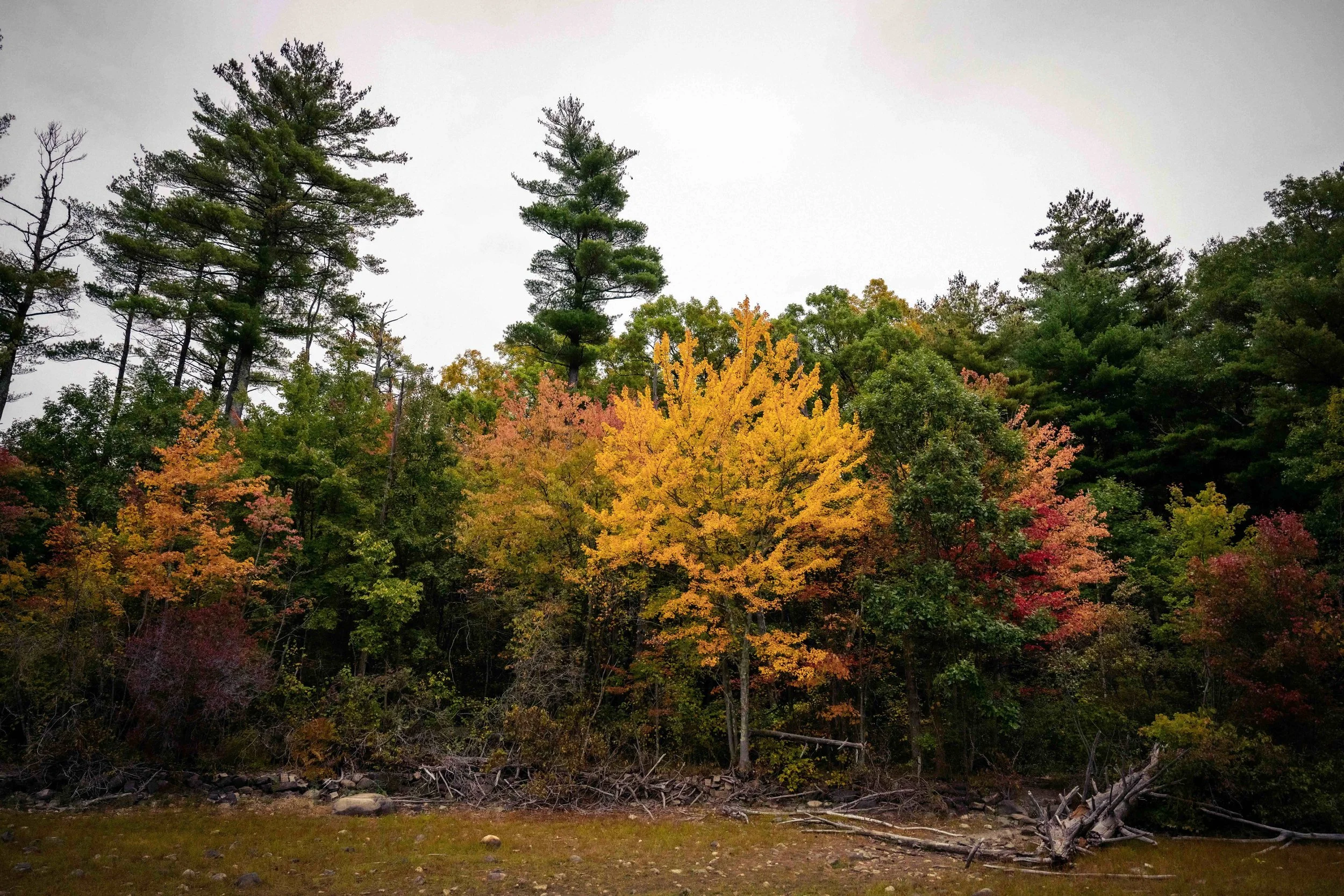
Looking at the two boys getting on with their exploration of the forest made me think about a point which has become increasingly significant in my work in art and in education. We tend to think of learning as a process of accumulating knowledge, as if the whole purpose of education is to fill the head with information which can then be retrieved and deployed at a later date. I'm increasingly of the view that some of the most important forms of learning start well before we ever attempt to explain anything. They start with noticing, with wondering and with the willingness to just be in the presence of the unknown. The boys obviously had this in spades. An insect creeping along a fallen branch wasn't just an insect to be catalogued and dismissed. It was an invitation to enter the world of the living. Their sense of curiosity was exactly the same as the kind of attention I've been trying to foster through my own art practice, particularly in the area of slow looking and nature-based art education. As an artist I've come to realize that looking is not simply a technical exercise in order to reproduce what you see. Looking is also a way of developing a more intimate relationship with the world around you. The more time you spend looking at something, whether it's a leaf, a tree, a bird or the shifting light across a landscape, the more you start to see things that you would otherwise have missed. It's interesting that children so often have this kind of openness to the world, before the pressures of adulthood begin to teach us to be more selective about what we pay attention to. As we grow older, we become increasingly preoccupied with productivity, with achievement, with the practicality of what we do. We often lose sight of the fact that wonder in itself can be a very valid pursuit. Perhaps one of the functions of education is not simply to equip children with the skills they need to survive in the world they're going to inherit, but to preserve their capacity to be curious about that world. And perhaps as adults we are all obliged to rediscover some of that childhood curiosity.
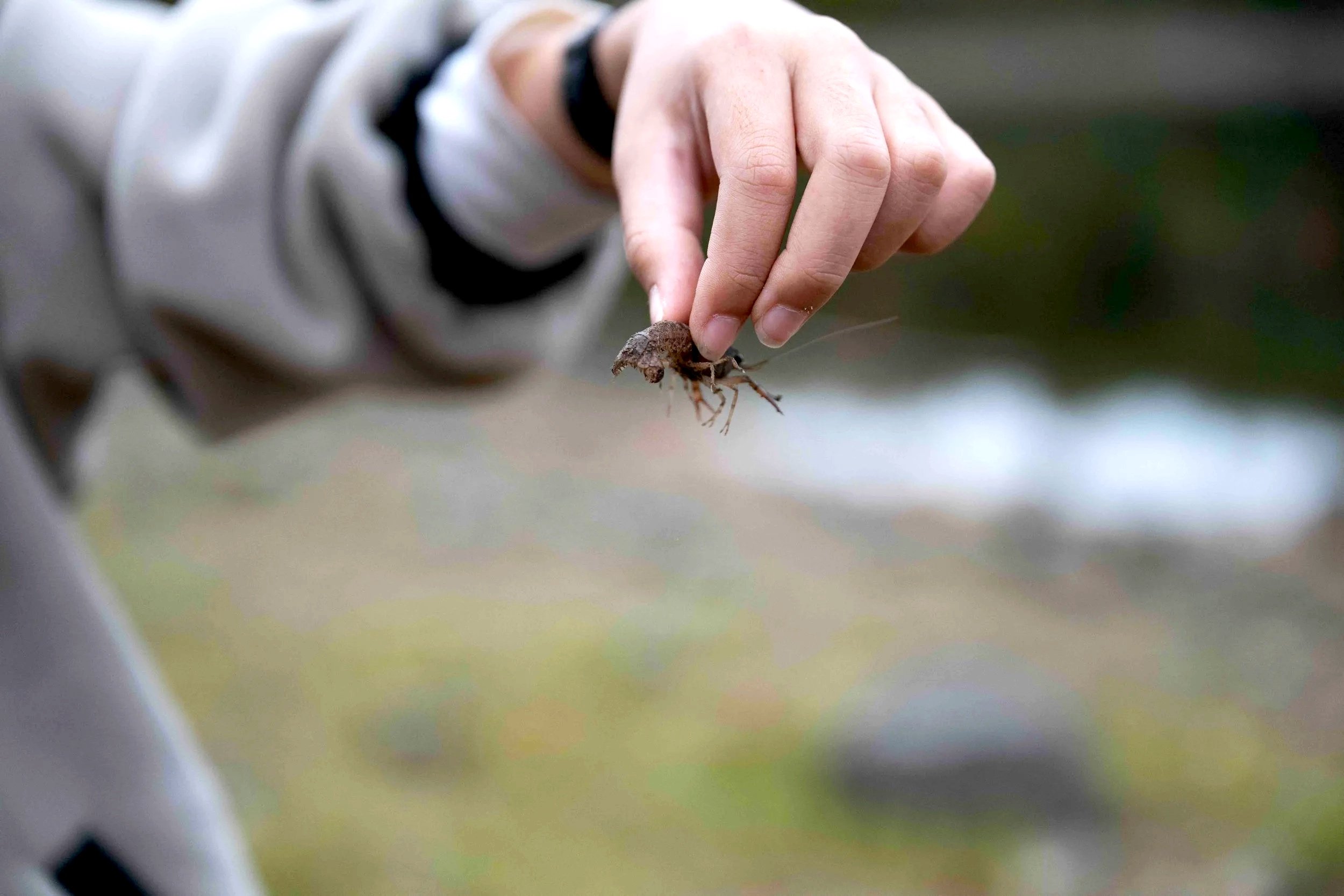
There's something about nature that just keeps on doing that to me. It's a constant source of humility, particularly when you think about how little it seems to care about the sense of urgency that pervades so much of human life. On our walk we were both quite taken by the trees, not just for their aesthetic qualities but for the sheer scale of the processes that go on in them as they grow, endure and eventually go back into the ground. A forest is a complex living system, a system of interlocking relationships of co-operation, competition, dependence and decay. It's not a perfectly harmonious system and it's not a chaotic one either and that in itself is quite beautiful. We often imagine nature as some kind of idyllic escape from the difficulties of the human condition, but nature is also full of struggle. Trees are constantly competing for light, animals must survive in a world of relationships which are not always kind and a vast number of living things die so that others may live. It can be both nourishing and destructive, magnificent and utterly indifferent all at the same time. In many ways it is a mirror of us. We are capable of the most extraordinary acts of kindness and of the most extraordinary acts of cruelty, of creating the most beautiful art and of causing the most suffering in the lives of others. What I find so fascinating about nature is its rhythm. The seasons change in their own time, irrespective of our own schedules and you can't rush the growth of a tree just because some other tree has got to a greater height. Of course, not all living things are given the same opportunities to grow and there is no guarantee that patience will be rewarded. That's perhaps why it is such a powerful teacher. It reminds you that life is not an orderly progression towards some kind of success and that growth often happens through uncertainty, difficulty and change. I am an ambitious person and I have a lot of aspirations for my artistic practice, for my education and for the life I would like to live. I want to make work that matters, I want to make my family proud and I want to do something that is of value to the world. At the same time, I am very aware of how easily ambition can become a source of its own suffering if we start to measure our worth in terms of what we achieve in comparison to others. The forest reminded me of the difference between being determined to achieve something and being so determined that the pursuit of that thing becomes the very thing that consumes you. I don't want to give up on my ambitions at all, I just hope to carry them with a little more patience and to realize that the value of my own life cannot be determined solely by what I achieve.
I'm also very aware that life isn't all sunshine and rainbows. I've long remembered the line from Rocky Balboa (2006) where Rocky describes the world as a cold, cruel place which can knock you down if you let it. The film presents that in the language of perseverance, but I've come to see it as a more general truth about life. There will be times when you will fail, when your dreams will seem utterly out of reach, when you will lose people, you love and when you will be utterly convinced that the world is completely indifferent to your suffering. No one can promise you an easy life and you can't expect some other person to come along and save you from every single hardship you encounter. I'm now beginning to wonder whether the only measure of strength is our ability to endure. I think there is another kind of strength in being compassionate in the face of disappointment, in being able to love deeply in the face of the very real prospect of loss and in continuing to believe in the good in other people even when you have seen the worst that humanity is capable of. We live in a world where hatred, political division, prejudice and violence are so very much in the spotlight. It can easily feel as if anger is the only thing that is visible in human nature, particularly as so much of our understanding of the world is formed by what we see on our screens. I don't believe that cruelty is the sum total of what we are. I believe there is a great deal of goodness in humanity, more than we are perhaps willing to acknowledge given our history and our present circumstances. We are a complicated species, capable of immense generosity as well as terrible acts of destruction. I don't pretend to have the answer as to how we might overcome all of the hatred in the world, and I am wary of offering simple solutions to problems which have plagued humanity for centuries. That said I do believe that kindness is one of the most powerful things we can do. It won't necessarily eradicate all injustice, but it is what creates the relationships and communities in which a more humane world is possible. A family inviting someone to spend the afternoon with them may seem a very small thing in the face of the huge problems facing our planet, but I would argue that is precisely what makes human life worth protecting. It is a reminder that goodness isn't some abstract philosophical concept but something we can do in the way we treat each other.
Recently I've also noticed a rather interesting shift in the way I experience my own life. I've been allowing myself to romanticize it a bit more (though not in any traditional sense of the word). As an artist I've always lived in part in the world of my imagination, finding the beauty in the mundane and making up stories around the people and places I meet. I've often found myself in the position of thinking that I'm living in a film, with an extraordinary cast of characters all passing through my life at various points. I quite like that way of thinking as it serves to remind me that there is always something to be treasured in the everyday. A conversation with a stranger, an unexpected friendship, the quality of light on a building, a walk through the woods etc, can all be seen as significant if you're open to it. At the same time, I do need to be mindful not to get so caught up in the romanticism that I lose the actual experience of living. This is particularly pertinent in an age where so much of our lives are documented, shared and presented to others via social media. I do love sharing my art, my travels and the experiences that inform my work and I genuinely believe that storytelling can be a way of encouraging people to see the world in a different light. My intention has always been to bring a little bit of imagination and creativity into people's lives, whilst also preserving something of my own experience. I do however recognize that there is a very fine line between celebrating life and becoming consumed by the idea of how that life is presented to others. I've certainly found myself spending more time than I'd like thinking about what to post, how to present an experience, whether a moment is worth sharing etc. There's nothing wrong with that at all and I think it's wonderful that we have the ability to connect through images and stories. The life we present online is of course only a tiny fragment of the life we actually live and it rarely if ever reveals the uncertainty, the disappointments or the private sorrows that go hand in hand with even the most beautiful of experiences. I would never want my own storytelling to make someone feel that their life is somehow less worthwhile simply because it doesn't look like what I choose to share. Humility is something I think I need to work at more deliberately as I continue to develop my own sense of self as an artist. I would of course like my work to be seen but I don't want the pursuit of being seen to eclipse the very reasons I started to make art in the first place. I paint because I love the world, because I'm interested in the world and because there are things I simply can't express in words. I hope to continue to share that love without the act of sharing becoming more important than the experience itself. Ultimately, I want my real life to be richer than its representation and I want my memories of people to be more lasting than the photographs I take of them.
As I keep thinking about all this, I find myself coming back to the subject of mortality. It's not in any way a source of despair, it's a source of a growing tenderness for the time we have. I often find myself reminding myself not to take life too seriously. I don't mean that we should be slack about our responsibilities or that we should abandon the things we believe in. I mean that we should realize just how ephemeral so much of our angst really is. An exam we fail, a conversation that goes badly, a missed opportunity, a painting that doesn't turn out as we'd hoped, these can all be absolutely devastating in the moment and yet they don't in any way define a human life. We will all die one day and that fact alone is strangely freeing. It does lead you to distinguish between what is actually important and what you've simply been trained to worry about. My faith tells me that our actions have significance beyond the immediate circumstances and that the way we treat other people is of the utmost importance. I also believe that faith should lead to humility rather than to certainty about everything we can't possibly understand. I don't know why there is suffering of any kind, and I don't claim to have an answer to the many inconsistencies of life. What I do know is that I want to spend my time doing what I believe is good. I want to love my family and my friends, I want to be faithful to my artistic practice, I want to do what I can to protect the natural world which has given me so much and I want to do what I can to help the people who come after us. I want to work hard without forgetting to rest, I want to dream without being swallowed up by expectation and I want to be open to the idea that some of the most precious gifts of life may well come to us unannounced. If there is a philosophy, I'm slowly learning to live by it is that we should take our values seriously and our worries a little more lightly. We can't control every aspect of our lives, but we can certainly take some care in the kind of people we become in response to those circumstances.
When I think back to that Sunday at Middlesex Fells what I can't shake is the sheer feeling of being welcomed into the lives of people who had absolutely no obligation to do so. There was no view that struck me (the forest was beautiful of course) and the autumn colors were spectacular. What remains most vivid is the feeling of being in the company of those two boys, their parents and one other wonderful soul. There was a real sense of curiosity on the part of the boys and a real warmth from the parents. It was just the pleasure of being out in the woods together with no greater purpose than that. There was a sense of reassurance in their company which I found very powerful. It was a reminder that the kind of human connection that is so valuable doesn't always come about through years of acquaintance or through any particularly extraordinary circumstances. We are social creatures, and we are all formed through the relationships we have with others. We learn who we are through them. We learn about the world through them. We are all, to some extent, shaped by the care of others through conversation, through friendship, through shared experience and through all the little unremarkable acts of kindness that we just don't always notice. I've been very lucky in my life to have known a number of wonderful people, and I increasingly feel that these relationships are some of the greatest gifts I have. As I go through this new phase here at Harvard, I am continually surrounded by people from all walks of life, with all sorts of backgrounds and interests and experiences which are constantly broadening my understanding of what it is to be human. It is a privilege I don't want to take for granted. The family I was with that Sunday reminded me of something fundamental. Beneath all our differences, our ambitions, our individual struggles there is a very basic human need to belong, to be understood and to share something with another human being. That is one of the reasons I have become so interested in creating spaces for collective art. Art, like nature, can be a way of encountering one another outside of the normalities of our daily lives. It can be a way of looking, of listening, of imagining and at times just of being together.
Perhaps that's where I end up after all this wandering. I started off by asking whether life has any point at all and I'm back again at the rather simple conclusion that the point isn't necessarily in some great achievement, some state of philosophical clarity or some distant destination we're all striving towards. It can be found in the very act of being alive with others. In the simple act of watching a child discover an insect, in the wonder of the texture of a tree's bark, in the shared laughter as we walk along a forest path, in the simple generosity of someone who has opened their home to us. It may not answer all the questions about life, but it does remind us of what is worth holding on to. I can't eradicate the hatred in the world or prevent the suffering that has been a companion to humanity throughout its history. But I can choose to respond with more patience, more generosity and more compassion. I can continue to paint, to learn, to love and to do whatever good I am capable of. I've spent a lot of my life learning how to see as an artist and I'm beginning to see that to see is to care. To pay attention to another person, to a tree, to a small creature, to the simple beauty of a normal afternoon is to acknowledge that they exist and that their existence is of some importance. That's why I've always felt that painting is an act of love, because it requires you to stay with something long enough to see it for what it is, to see its beauty, its complexity, its individuality. That's probably why I feel the same principle can be applied to how we live. To the wonderful family who so kindly opened their home to us on Sunday, thank you. Your kindness meant more than you can possibly know, and I will treasure that time with you. To my friends and family both near and far, I love you all and I hope I never get so busy in the pursuit of life that I forget the people who make it worth living. There's so much of this world I still have to learn about, so much beauty to experience and so many stories to hear. I have no idea what tomorrow will bring or how much time I have left to experience it all. But I do know that I want to remain curious, to keep my heart open and to meet the world with as much love as I can. If Sunday taught me anything it's that the goodness we so often seek in other people is far closer than we realize and it's simply there in the kindness of those who are around us. And what a wonderful privilege it is to be alive long enough to notice that.
With love,
Kareem Moumina