
The Art of Being Human
On time, imperfection, and learning to see
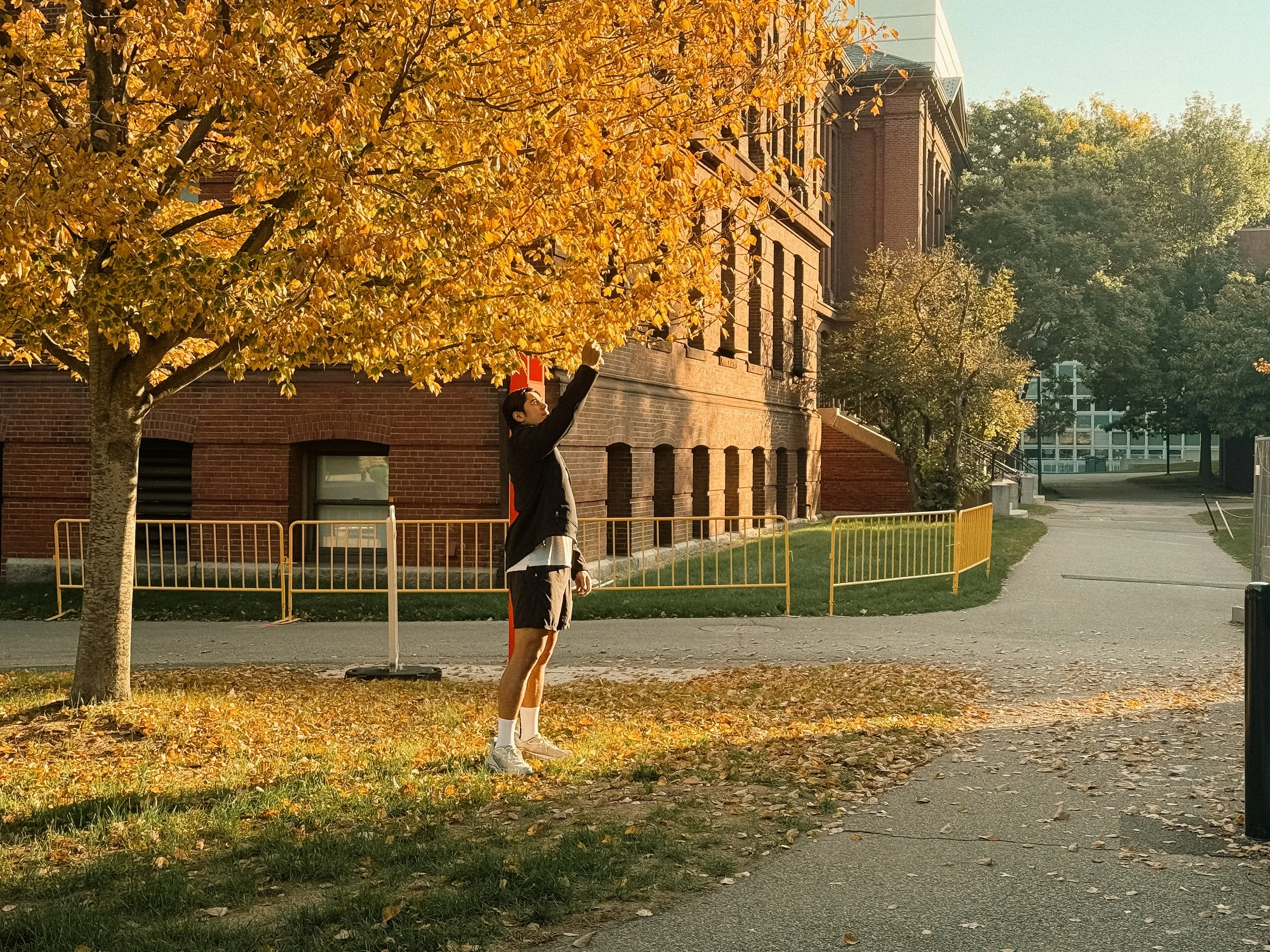
Life moves very fast. Sometimes a little too fast for my liking. The clock keeps going on whether or not we are ready, and there's a certain aspect about that which I find both terrifying and beautiful. We wake up, carry out our duties, make arrangements for tomorrow, and yet another week has already come and gone. I've been giving a great deal of thought to time recently, especially as autumn is now settling in at Cambridge. The leaves are changing color, some have already fallen, and the trees which were once full of life are gradually becoming bare. I have always enjoyed the season of autumn, even though it does carry a certain sense of sadness. It makes me aware that nothing is permanent, that life is always in a state of change, and that we are all, in some way, moving towards something which we can never fully comprehend. I often ask myself how much of our lives we spend preparing for the future instead of enjoying the present moment. We tell ourselves that we'll be happy when we achieve something, when we finish our studies, when we become successful, and when we finally have enough free time. But when is that time meant to arrive? I don't really know. What I do know is that life is immensely valuable, and I think we tend to forget that while we are so busy with all the things we are trying to achieve. There is so much beauty all around us that we fail to notice, maybe because we have become so used to moving from one thing to another. I've been making an effort to remind myself to notice more, to look at the trees, to appreciate the people nearby, and to remember that simply being alive is something extraordinary.
Though I've said all this, I must admit that I haven't been especially satisfied with the way I've been looking after my own life recently. I've not been living up to my potential, or at least to what I think I am capable of. I've skipped my morning visits to the gym, gone to bed much later than I should have, put off my assignments, forgotten to get in touch with people, and missed opportunities which I probably ought to have taken more seriously. There have been a great many mornings when I wake up knowing precisely what I need to do, only to be diverted by something else. And then the day goes by and I tell myself that tomorrow will be different. I've had quite a number of wake-up calls lately. It's annoying because I am aware that I can be more disciplined and that my ambitions call for a certain degree of commitment. But maybe this too is part of what it means to be human. We are not always consistent, and we by no means operate at our full potential every day. I often find myself asking why we expect ourselves to. At school, at work, and even among friends, there seems to be this pressure to appear as if we have everything all worked out. We want to look intelligent, confident, productive, and successful. We want people to see the best versions of ourselves, even though in reality we are struggling with things that no one else knows about. I do this myself. I am ambitious, perhaps even a bit too ambitious, and I enjoy achieving things. I like being praised for my work, and yes, I have to admit that I do like showing off from time to time. I don't think there's much point in pretending that I don't. But I also believe that a great deal of this comes from a real desire to share with other people what I love. Whenever I finish a painting, organize an art event, or come across something beautiful, I want others to share in some of that excitement too. Of course, there is an ego involved, as there is in most of the things we do. I am still working on learning how to tell the difference between wanting to be seen and wanting to contribute something meaningful.
Recently I've been keeping in mind the idea that I should never let anyone decide my worth. This seems especially important when we are among intelligent, successful and ambitious people. It's easy to start comparing ourselves with others or to become too worried about how we are seen. Someone might misinterpret us, make a guess about our intentions, or form an opinion after only a short conversation. But why should their interpretation of us be the reality? I have never really been in favour of accepting something just because someone has told me it's true, no matter who they are. I do respect knowledge and experience, and there is a great deal that I can learn from other people. Yet I don't think that any human being has all the answers. We are all limited by our experiences, our beliefs, and the particular ways in which we have come to understand the world. Even the beliefs we hold most firmly may not actually be true. I find that interesting and at times rather disturbing. Our beliefs can provide us with a sense of purpose, affect our decisions and shape the course of our lives, yet they are still open to doubt. That is probably the reason I place such value on curiosity. I would like to stay someone who is willing to listen and to even admit when I am wrong. At the same time, I also want to keep my own sense of autonomy. I want to make decisions based on what I truly think is important, rather than always changing myself to meet other people's expectations. I don't believe that means ignoring criticism where on some occasions criticism is precisely what we need. But I do think there is a difference between learning from another person and allowing their judgment to become the standard by which we judge who we are.
I've thought about all of this ever since I started my studies at the Harvard Graduate School of Education. This week I went to the Charlestown Nursery School and came away with a number of thoughts. I have become more and more interested in early childhood education, especially the way in which children interact with art, various materials, one another, and the natural world. I find it rather remarkable how children deal with things which adults usually take for granted. They are curious about the tiniest details, are willing to experiment, and are not always worried about whether what they are making will turn out right. Of course, I wouldn't want to romanticize childhood since children do experience frustration, uncertainty, and their own difficulties just as adults do. But there is something in their readiness to explore the world that I believe we can learn a lot from.
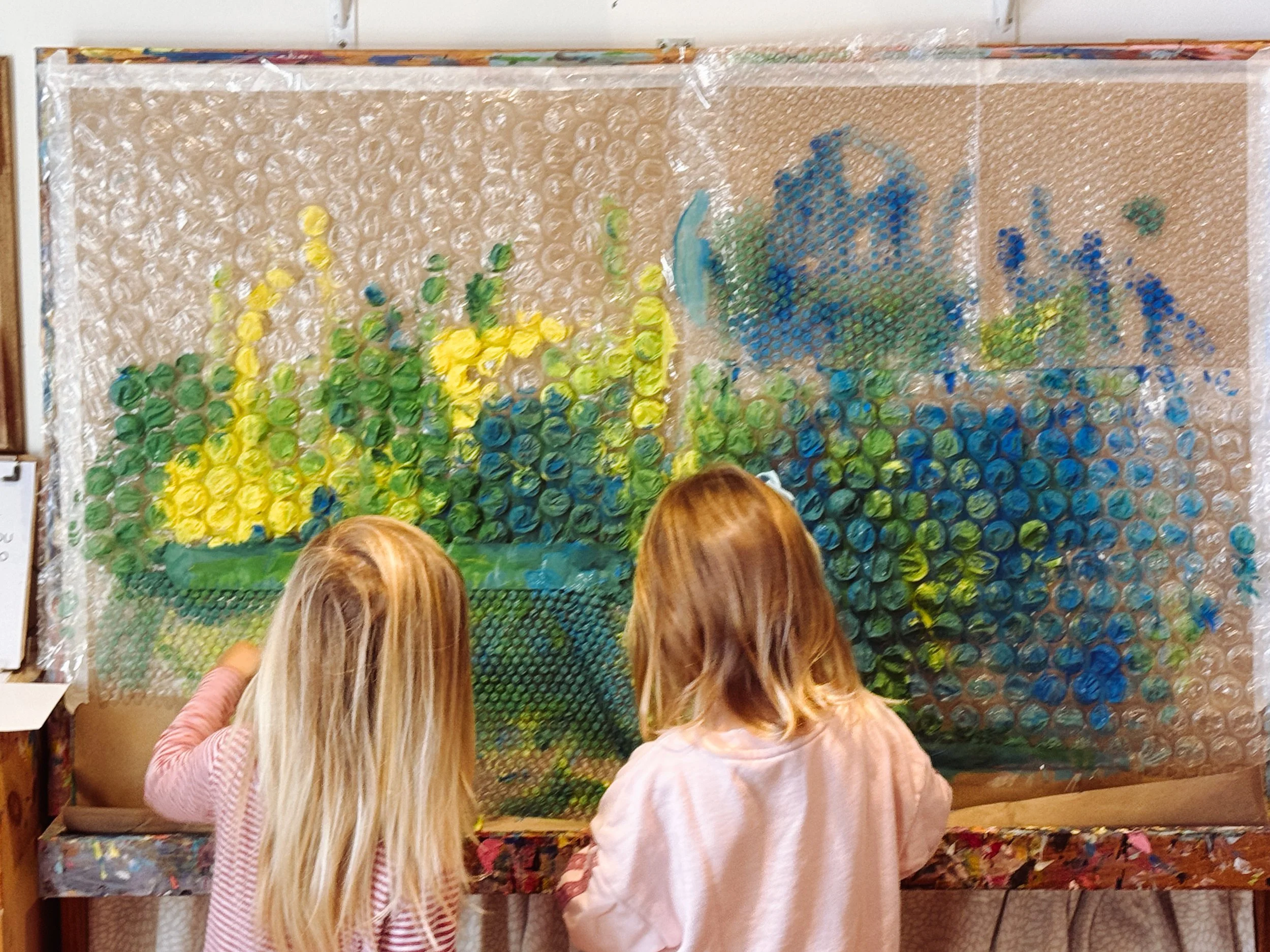
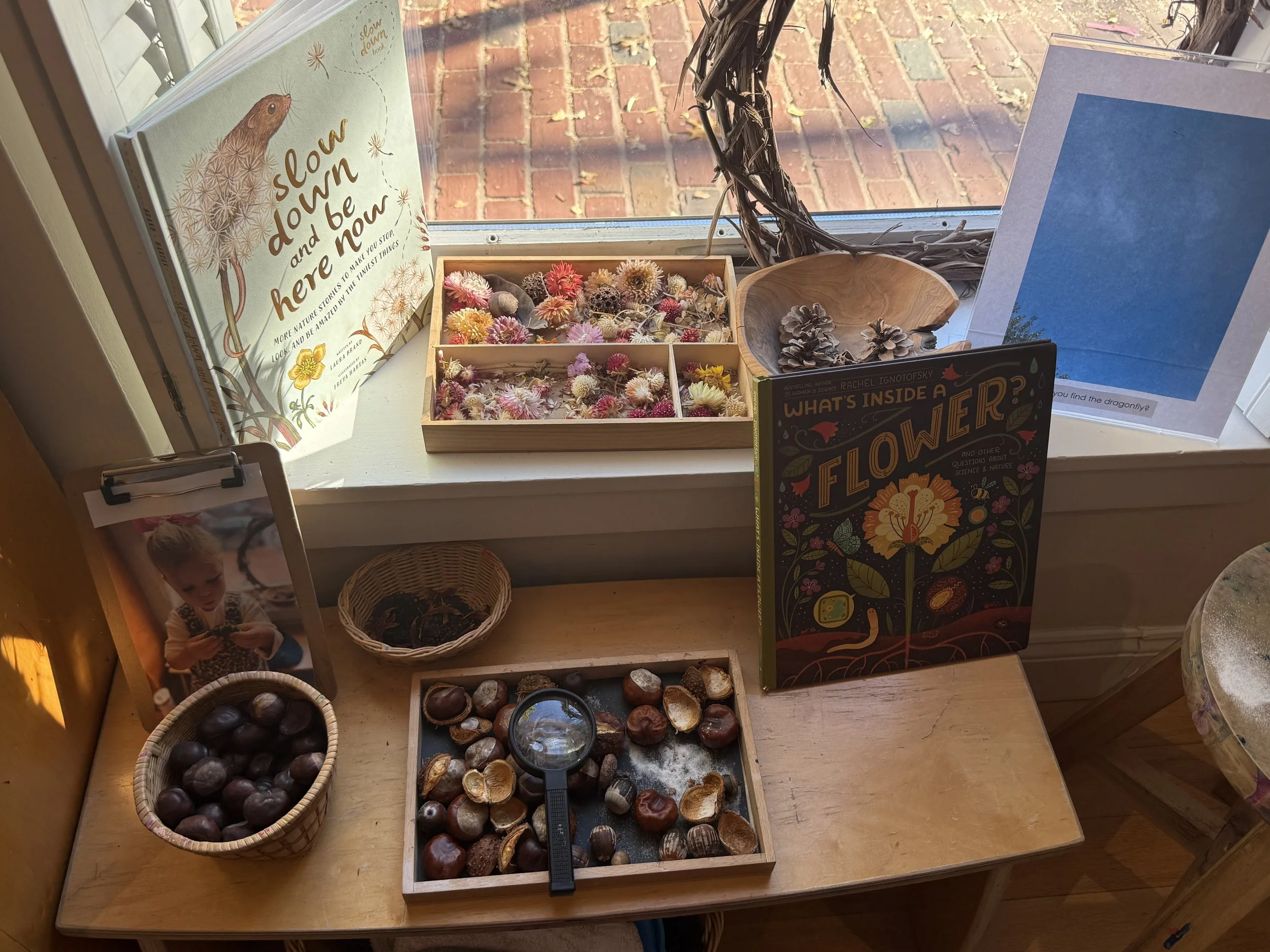
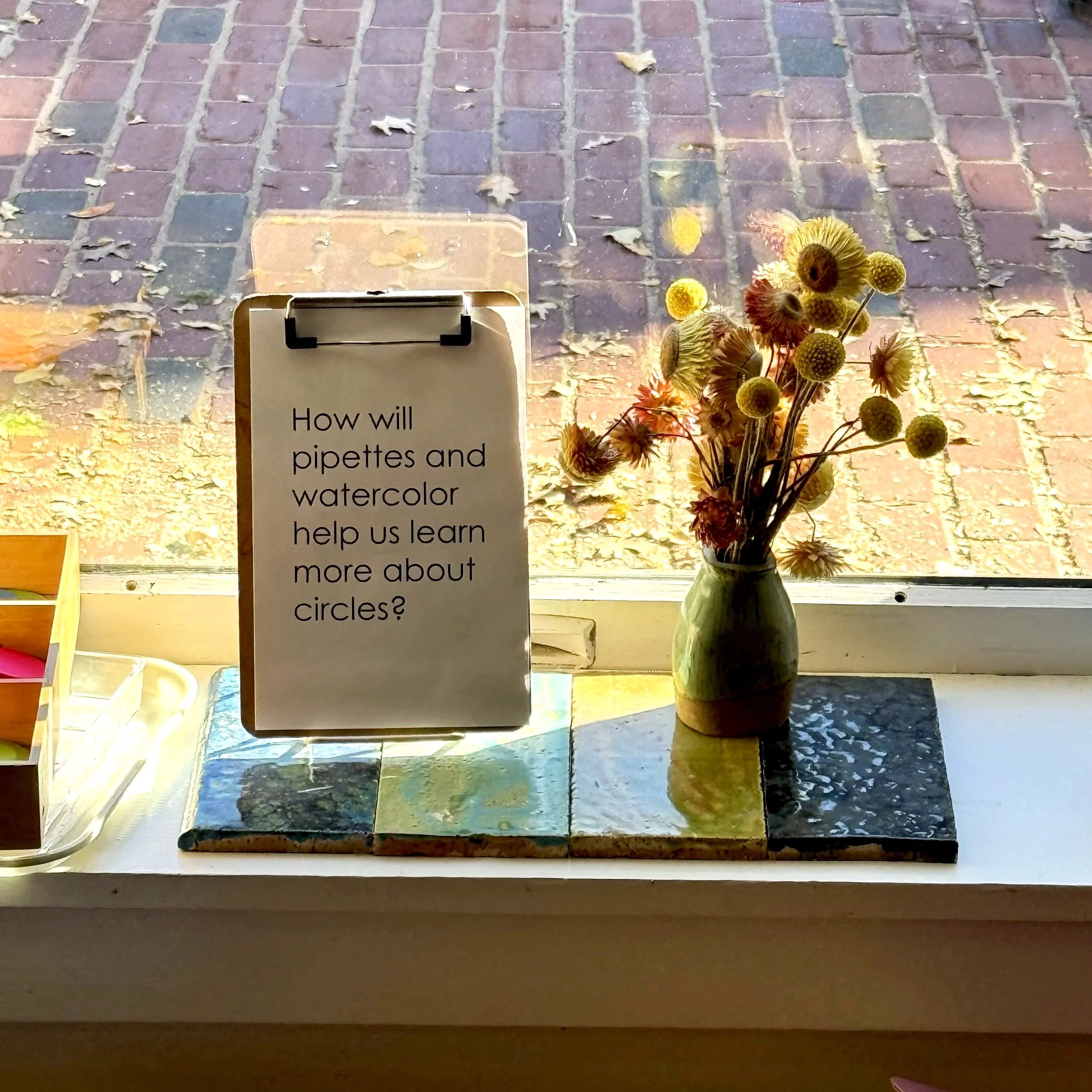
As I walked around Charlestown Nursery School, I was immediately taken by the atmosphere. Books were scattered throughout the place, together with carefully organised materials, wooden items, natural objects, photographs of the children's work, and various questions which encouraged more exploration. In one area there were leaves, flowers, seeds and magnifying glasses. In another area there were wooden nesting objects of different sizes, along with a question concerning how five objects might fit inside one another. In the art area I saw the children working together on a large sheet of bubble wrap, pouring on colors and experimenting with the kinds of marks they could make. I remembered looking at the painting and thinking it was interesting that something so ordinary as bubble wrap could be used as a material for artistic investigation. Since I am a painter, I am used to using brushes, pigments and canvas, and I usually have a specific image or idea in mind before I start. But what occurs when some of these expectations are removed? What happens when the aim of painting is not necessarily to represent something, but simply to find out what a material is capable of? I have been thinking a lot about this question in my course Contemporary Art in Early Childhood, which is taught by Dr. Louisa Penfold. The studio sessions have encouraged us to experiment with different materials, work together with each other, and consider artistic experiences that go beyond the final product. Recently we looked at sound art, collecting ordinary materials and putting on a small performance in which each person made a different sound. It was fun and rather unpredictable, but I believe that was exactly what made it interesting. We were creating something together without really knowing in advance how it would turn out.
What fascinated me most at Charlestown Nursery School was the way in which the children's learning was recorded. On one wall there was a display illustrating a cycle of inquiry that started with observations and photographs, then moved on to research, reflection, assessment, and the formulation of new questions. Another display depicted the children investigating three-dimensional forms, the photographs and written observations explaining how their investigations had developed. I took some time to look at these displays since they seemed rather touching—not in a sentimental sense but because they showed that the children's ideas were being taken seriously. Their actions were not just seen as things to keep them busy. The teachers were observing what the children were interested in, thinking about what they might be learning, and then using those observations to decide what should happen next. I feel that there is a deep respect in this approach. It means that the adult has to pay attention, to listen, and at times to resist the urge to give an answer right away. I was reflecting on the Reggio Emilia approach, which I have become more and more interested in. One of the key ideas of this approach is that children have many different ways of expressing and constructing knowledge, a concept often referred to as the Hundred Languages of Children. Drawing, sculpture, movement, sound, and play can all become ways of thinking and of communicating (Edwards, Gandini, & Forman, 2012). I find this especially meaningful because I have always believed that art is much more than the making of beautiful objects. To me, art is a way of understanding the world, a way of asking questions, and most importantly perhaps, a way of developing relationships with the things we meet.
I also observed how carefully the environment had been organised. Materials were placed by the windows, natural objects had been collected and put in baskets, and books were positioned next to things that children could touch and explore. In education inspired by Reggio Emilia, the environment is frequently referred to as the third teacher, and I am now beginning to see what this expression means. The space itself has the power to stimulate curiosity. For example, the way the light falls on a table, the way the objects are arranged, or the fact that an unfamiliar material is present can lead a child to notice something that they would have otherwise ignored. This is something that closely relates to my own artistic work. When I go out to draw, I never know in advance what will catch my attention. It might be the shape of a branch, the movement of a bird, or the way the sunlight alters the colour of a leaf. I might have passed the same object many times before, yet on a particular day I become aware of something completely new. I believe that learning often starts in such moments. Before we can understand something, we have to be willing to come across it, and before we can come across it in a meaningful way, we must pay attention.
One of the most appealing exhibits at the school was called The World Is Our Classroom. It featured photographs of children exploring outdoor areas, examining plants, and engaging with the surroundings. I couldn't help but smile since this is exactly something I've been thinking about for a long time. Nature has always been one of my best teachers. A great deal of my work as a painter has been influenced by my time spent outdoors, whether in the landscapes of Tuscany, the deserts of Saudi Arabia, or in other natural environments I've come across. I think there is something significant in learning directly from the world rather than just relying on representations of it. A photograph of a tree can teach us something, but standing under that tree, looking at its branches, hearing the wind rustle through its leaves, and feeling the texture of its bark gives a completely different kind of experience. This is also the direction I have been taking in my practice-based research at Harvard and in the art workshops that we have arranged together with my Art club The Butterfly. I am interested in the way that slow looking, artistic making, and shared experiences in nature could help people build a deeper sense of attention and connection. Shari Tishman’s book Slow Looking: The Art and Practice of Learning Through Observation(2018) has been especially important in forming these questions. Her work prompts us to think about what might happen when we take more time to observe something carefully. I keep coming back to this idea because it seems so simple, yet it is something that we are increasingly unable to do. We live in a world that is always fighting for our attention, and at times I wonder if we have forgotten how to look simply.
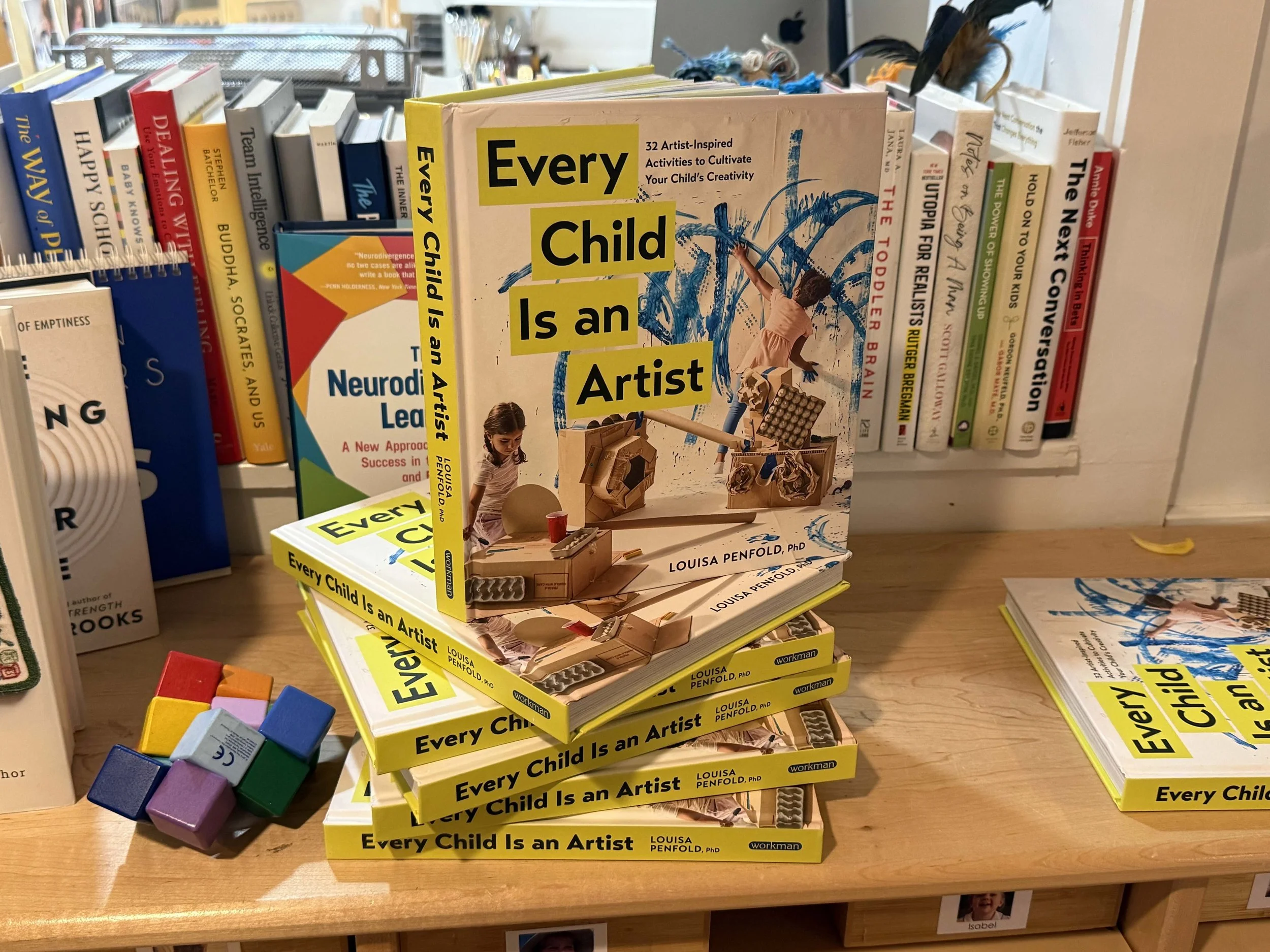
I was glad to see copies of Louisa Penfold's book, Every Child Is an Artist, on display at the school since it served as a pleasant reminder of the way the ideas we deal with in class can be put into practice. Louisa's work has led me to think again about what it means to introduce contemporary art to young children and about how artistic experiences can be arranged so as to stimulate curiosity rather than require a specific result. Given that I have spent many years working on my technical skills as a painter, I find this change in viewpoint particularly interesting. I still think that technique, discipline, and artistic knowledge are of great importance. However, I am now beginning to realise that these are not the only ways of approaching art, especially in the early childhood stage. There are instances when we can learn more by letting children explore on their own than by showing them exactly how something should be done. I also believe that an attitude of humility is necessary on the part of the educator. We have to recognise that children may discover things which we did not expect and that their interpretations might differ from ours. This does not imply that the teacher has no responsibilities at all and on the contrary, it requires a great deal of thought and care to set up an environment that is both open-ended and educationally significant.
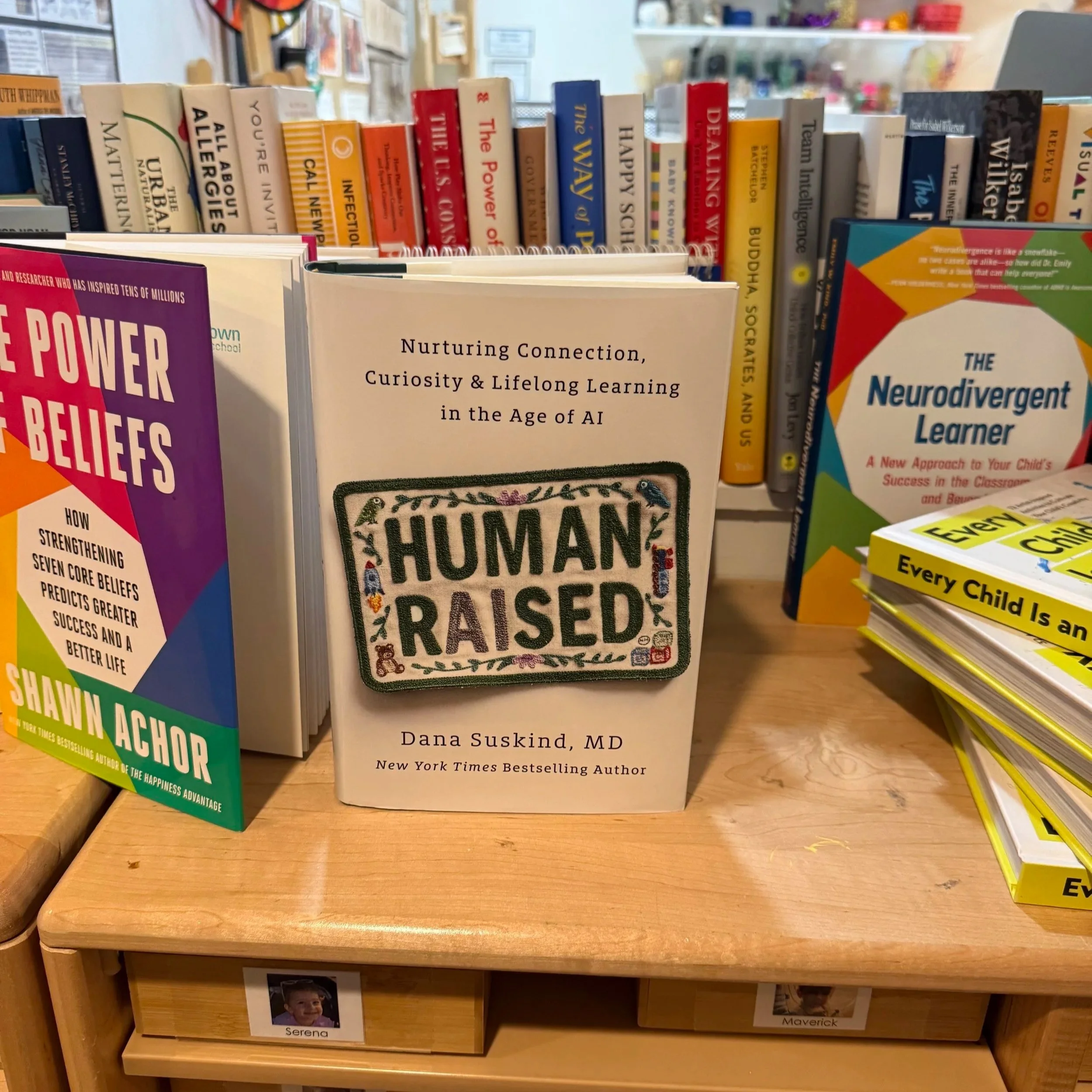
While I was there I also came across a number of books that interested me, a few of which I would like to spend more time reading. The book Human Raised: Nurturing Connection, Curiosity, and Lifelong Learning in the Age of AI by Dana Suskind immediately attracted my attention, mainly since I am interested in the relationship between artificial intelligence and human learning. In a different course at Harvard entitled Impact by Design I have been looking into issues concerning AI literacy, transparency, and the way in which students use artificial intelligence to aid their education. I am becoming more and more concerned about the difference between simply finishing a task efficiently and actually learning from the experience. I use AI myself and I know how useful it can be, particularly when one is trying to grasp difficult readings or arrange complex ideas. At the same time, I am worried about the consequences if we become too reliant on tools that are able to think, summarize, or produce things for us. What then becomes of our patience, our curiosity, and our readiness to struggle with something that is difficult? I do not believe the solution is to reject technology altogether, because that would be far too simple. Instead, I think we should consider which aspects of learning are worth preserving, even when more efficient alternatives come along. The book by Suskind seems particularly pertinent to this question and I am looking forward to looking at it in more depth.
I'm also looking at Cal Newport's book Deep Work (2016). Since I've recently had trouble with procrastination and in sticking to routines, I think I might be able to gain some insights from his views on concentration and the need to set aside time for worthwhile work. I've likewise been interested in Angela Duckworth's book Situated, which looks at the significance of the people and environments that surround us. This seems especially pertinent to my increasing awareness of educational settings and the way they affect our development. Rutger Bregman's Moral Ambition (2025) brings up another set of questions concerning how we can make use of our abilities and opportunities to do something valuable for society. And lastly, Kobi Yamada's Because I Had a Teacher (2017), illustrated by Natalie Russell, drew my attention because of its tender reflection on the role of teachers. I believe that even though these books are very different from each other, they all appear to be pointing towards something that I have recently been trying to work out for myself. That is, how can we become better versions of ourselves without losing sight of what makes us human? How can we achieve success without becoming overwhelmed by it? And how can we apply what we have learned to make someone else's life a little better?
I often think about these questions since I am aware that I can be very self-focused. As an artist I have ambitions, specific aims for my career and things that I hope to achieve in the coming years. I would like to become successful and I don't consider it at all wrong to admit that. At the same time I know that success by itself wouldn't be sufficient for me. I would like my work to have significance beyond just myself and I would like to produce paintings which make people see the world in a different way. I would like to arrange artistic experiences that bring people together. I would like to make a contribution to education in a way that fosters curiosity, imagination and a greater appreciation of the natural world. I'm not entirely certain what the final form of all this will be and maybe I don't need to know now. One thing I'm learning during my time at Harvard is that there is merit in letting our ideas develop slowly. We don't always have to have a fully worked-out philosophy or a clearly stated destination. At times we just need to stay open to what our experiences are teaching us.
I also have a thought to share about kindness. I truly believe that one of the most significant things we can do during our lives is to show care for others and to give help whenever it is required. Although it may seem simple, maybe even obvious, I don’t think we always carry out this practice as consistently as we ought to. We get so absorbed in our own duties, our insecurities, and our ambitions that at times we forget that the people nearby are living situations just as complex as our own. All of us have something that lies beyond sight. I think that education, when it is at its finest, should enable us to realize this. It should not only make us more knowledgeable or skilled, but also more attentive to other people. I am not sure whether kindness can be taught in the same way that we teach mathematics or writing, but I do believe it can be developed through the relationships and the environments we establish. Maybe that is one of the reasons why I am so attracted to the Reggio Emilia philosophy, with its focus on listening, relationships, and the importance of each child's point of view. There is a sort of respect in the act of listening carefully to someone. It lets them know that their ideas are important, that their experiences are worth being noticed, and that they have something valuable to offer.
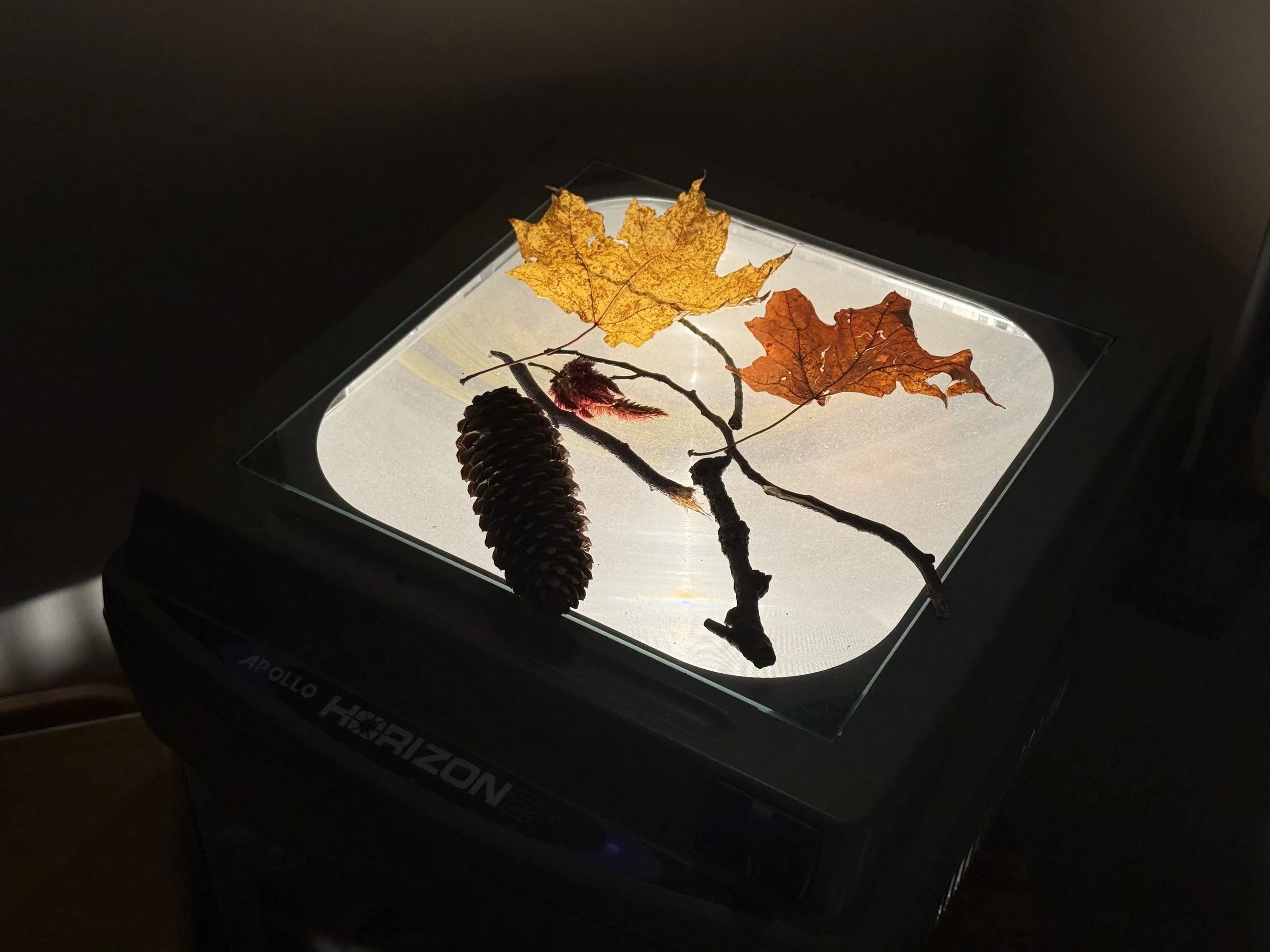
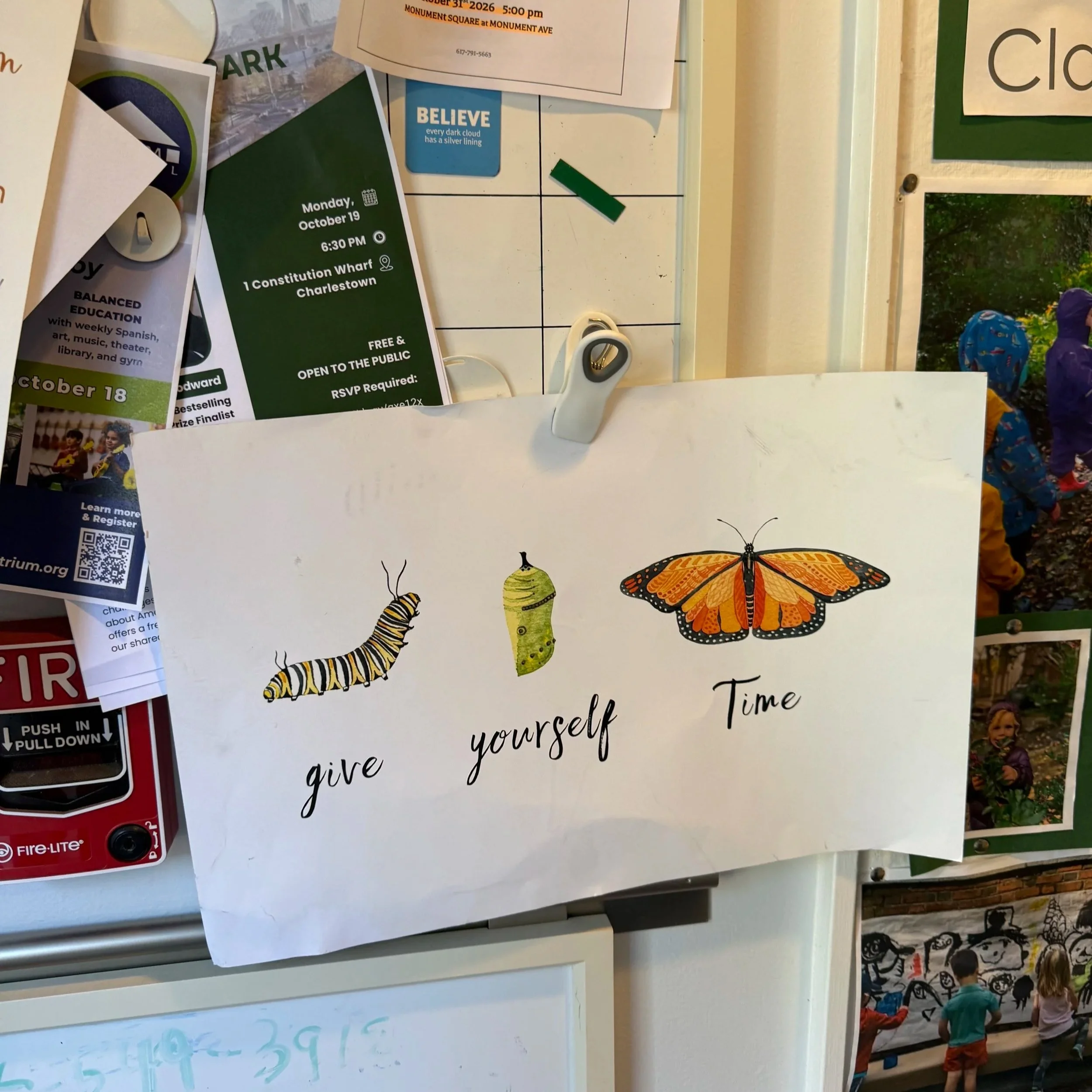
When I am writing this, I am once more aware of the autumn leaves outside my window. They will keep on falling no matter whether I complete all my assignments, attend each morning workout, or achieve all that I have arranged for myself. The world will carry on and time will not stop until I have my life perfectly organised. I find this a bit frightening, but in a strange way also reassuring. It may be a sign that life was never intended to be a perfectly controlled series of achievements. We are permitted to make mistakes. We are allowed to feel unsure. We are free to change our minds and to start all over again. Of course, that does not mean that we are excused from taking responsibility for ourselves. I still would like to wake up earlier, go back to my routines, keep to my commitments and make better use of the opportunities which have been given to me. But I would like to do these things from a sense of appreciation rather than out of continuous dissatisfaction. I would like to become more disciplined because I respect my time, not because I think that I am in some way less worthy when I fail.
I am not sure that I have arrived at any great conclusion this week. If anything, I now have more questions than when I started. Yet I consider that to be fine. The trip to Charlestown Nursery School made me realize that learning doesn't always start with having the right answer. It can instead start with a child asking what will happen if they press a painted work of bubble wrap against a surface, or trying to work out how a number of wooden objects might fit inside one another. Though these are minor moments, they have something significant to offer, namely, a readiness to investigate, to experiment, to make mistakes, and to try again. I believe adults too need to rediscover that readiness.
I have always held the view that I paint out of love, and that for me painting is an act of love. I am now coming to the belief that education can be understood in the same way. To teach, in a certain sense, means that we care sufficiently about another person's development to be willing to spend our time, our attention, our ambition, and our patience on them. When we create art we share with others some of the way we see the world, hoping that they might find meaning in it. And perhaps to live well is to stay curious and generous enough to realize that our lives are linked with those of others. I never expect to have all the answers and I don't really want to. It is beautiful to know that there will always be more to find out. At the moment, I hope to continue learning, continuing to paint, keeping on questioning, and always looking for reasons to appreciate this short and remarkable experience of being alive.